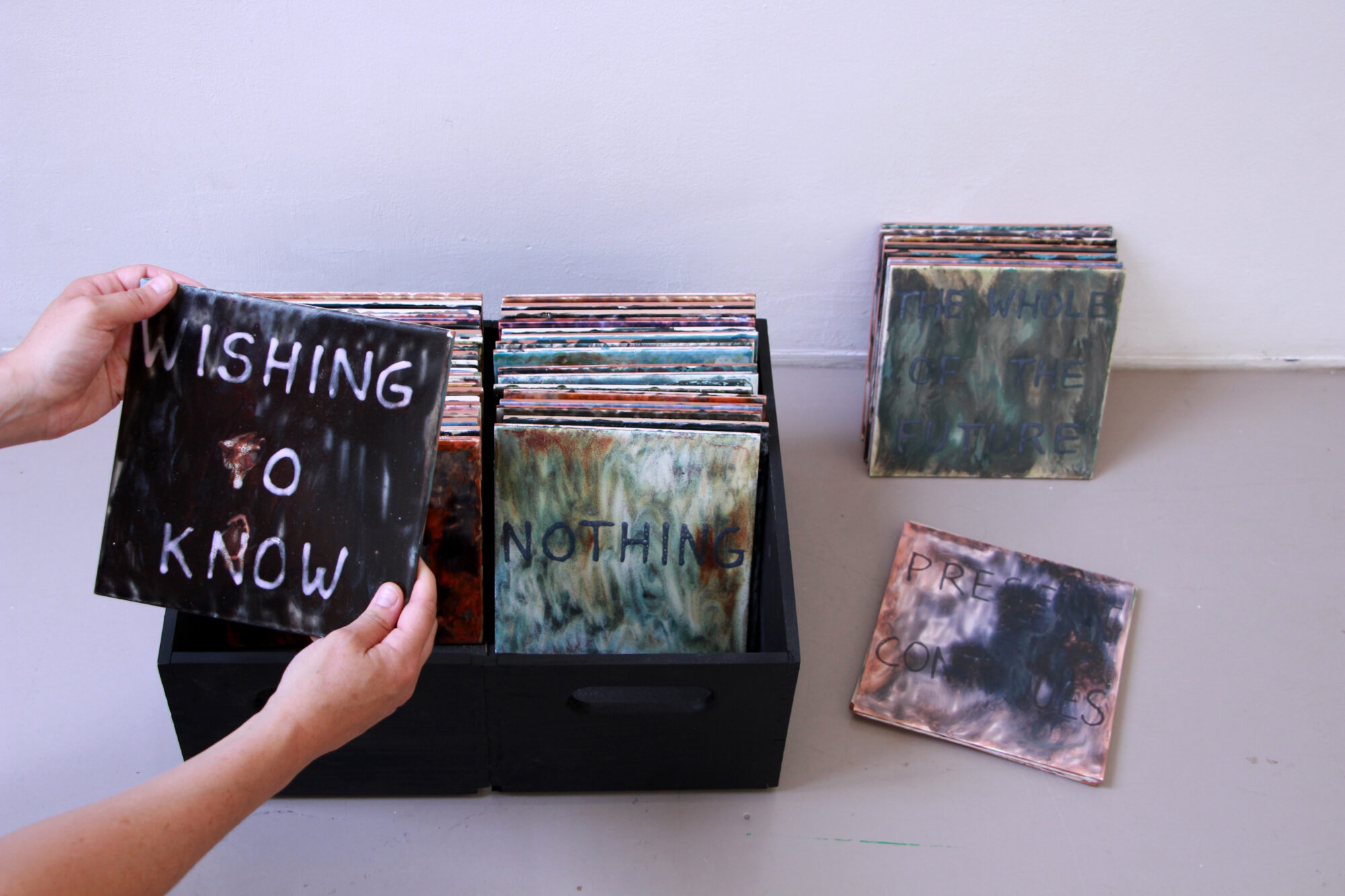
Céline Vaché-Olivieri, Words of Fire, 2017-…, Image: Marine Peixoto

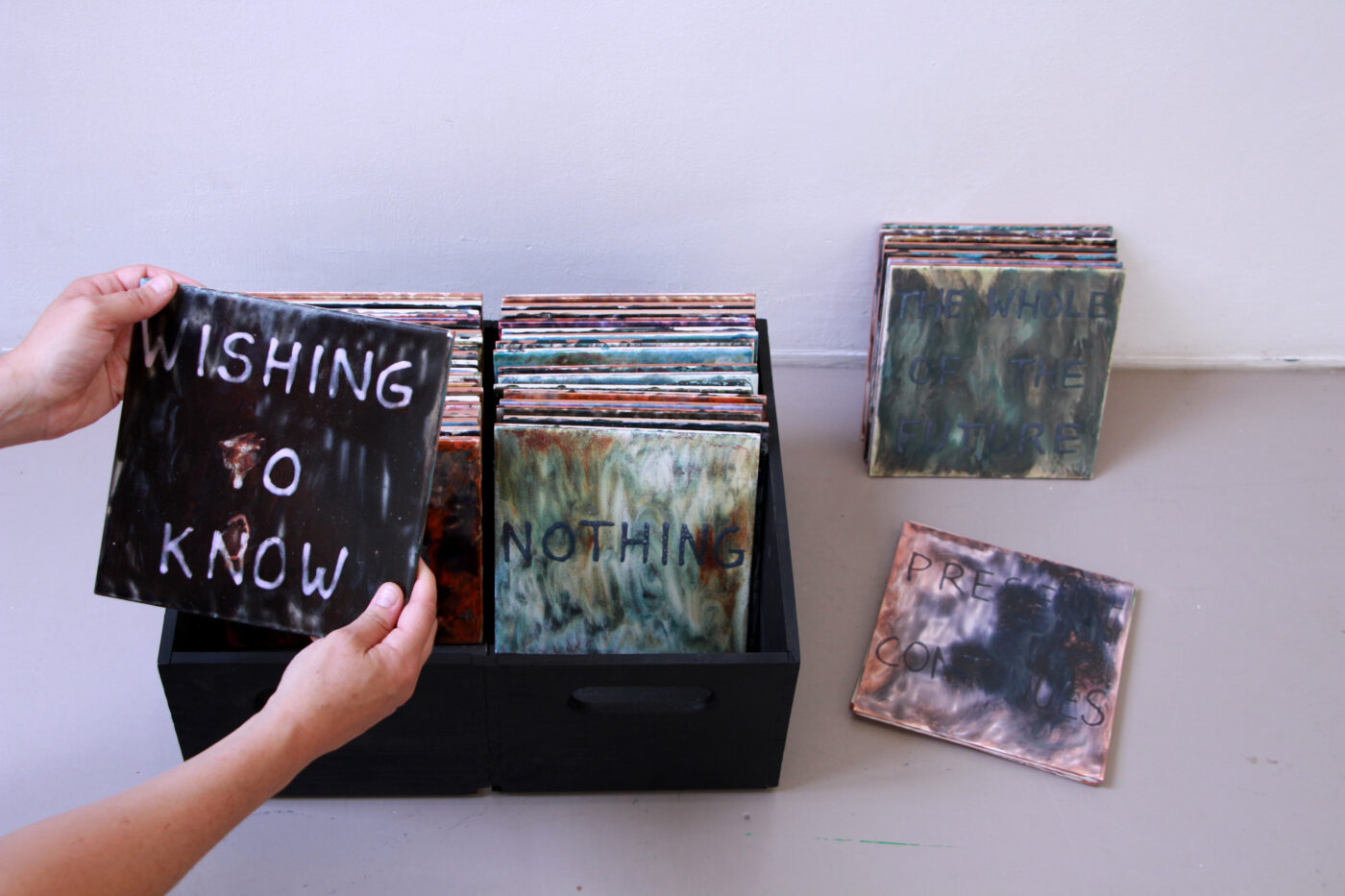

Céline Vaché-Olivieri, Words of Fire, 2017-…, Image: Marine Peixoto


Toxic
With Mehdi Ahoudig, Virginie Bobin, Camille Bloomfield, Xavier Coumoul, Marie Dasylva, Marik Froidefond et Cyril Vettorato, Laurent Jeanpierre, Théo Robine-Langlois, Lucie Taïeb and Louisa Yousfi
Writing Workshop
What do you do when a word is stuck right on the tip of our tongue like that?
Omnipresent, fluid, and ever-shifting, the word “toxic”¹ surrounds us. Sometimes it overwhelms us. Often, it suffocates us. With this word, we want to describe a series of phenomena that affect us in our daily lives, our jobs, our reading, our relationships, our refrigerators, or even the words we use: that sense that a pervasive toxicity constantly slows down our movements, our interactions, and our ability to act.
Our question is simple: what resources or “vitamins” do we have at our disposal?
To sharpen our tools, five sessions featuring:
· mornings devoted to narratives and stories to share: a speaker will address us from their field of expertise (literature, ecology, activism, sociology);
· afternoons dedicated to experimentation through writing, led by poets, a translator, and a filmmaker, during which we, in turn, will have to find the words.
Five sessions and a final edition to journey together through an autumn and winter that will undoubtedly lead to a politically explosive spring.
It’s up to us to reinvent the seasons, since, as they say, there aren’t any left…
¹ The project’s title is taken from Britney Spears’ 2003 song “Toxic”: “Slowly, it’s taking over me / Too high, can’t come down / It’s in the air and it’s all around…”
Lise Wajeman
Lise Wajeman (1973, France) is a professor of comparative literature at Université Paris Cité, where she is a member of the CERILAC research laboratory. She has conducted research on Renaissance literature and art; her publications include L’Amour de l’art. Erotique de l’artiste et du spectateur au XVIe siècle (Droz, 2015), but she also follows current trends in contemporary literature as a critic: she has published numerous articles in Mediapart and is a regular contributor to the podcast L’Esprit critique. A resident at the Villa Medici in 2024–25, she is currently working on a book of autotheory focused on secondary characters.
Clara Schulmann
Clara Schulmann (born in 1981 in Paris) holds a PhD. in film studies and, in addition to teaching at art schools, is active as a film critic. She coordinates publishing projects: Jeux sérieux. Cinéma et art contemporain transforment l’essai (HEAD/Mamco, 2015), Palmanova (Form(e)s, 2016), and Laura Mulvey, Au-delà du plaisir visuel. Féminisme, énigmes, cinéphilie (Mimesis, 2017). Her dissertation was published by Presses du réel (Les Chercheurs d’or. Films d’artistes, Histoires de l’art, 2014). Her latest publication is titled Zizanies (Paraguay Press, 2020)—a first-person narrative dedicated to women’s voices. She is currently working on a second book to be published by Éditions du Sous-sol. Titled Morsures, it explores the connections between writing and vampirism
This project is being carried out in collaboration with the Villa Medici in Rome, the Culture Department of the Université Paris Cité, and the CERILAC Laboratory at Université Paris Cité.
For information and pre-registration, contact the Culture Department at Université Paris Cité on this link.
Location: Université Paris Cité & Bétonsalon — art and research center
The morning sessions are open to everyone.
Registration is required for the writing workshops, and participants must commit to attending all five sessions.
Please note: Places are limited.
A final event will be held in February 2027 at Bétonsalon.
10:00 am–1:00 pm: Laurent Jeanpierre, political scientist and professor of political science
2:30–5:30 pm: Théo Robine-Langlois, poet and artist
10:00 am–1:00 pm: Lucie Taïeb, writer, teacher, and translator
2:30–5:30 pm: Marik Froidefond and Cyril Vettorato, poets and researchers in comparative literature
10:00 am–1:00 pm: Louisa Yousfi, writer
2:30–5:30 pm: Virginie Bobin, curator and translator
9:00 am–12:00 pm: Xavier Coumoul, researcher in biochemistry and toxicology
1:30–4:30 pm: Camille Bloomfield, poet and researcher in comparative literature
10:00 am–1:00 pm: Marie Dasylva, strategic coach for marginalized individuals
2:30–5:30 pm: Mehdi Ahoudig, sound and audiovisual director

