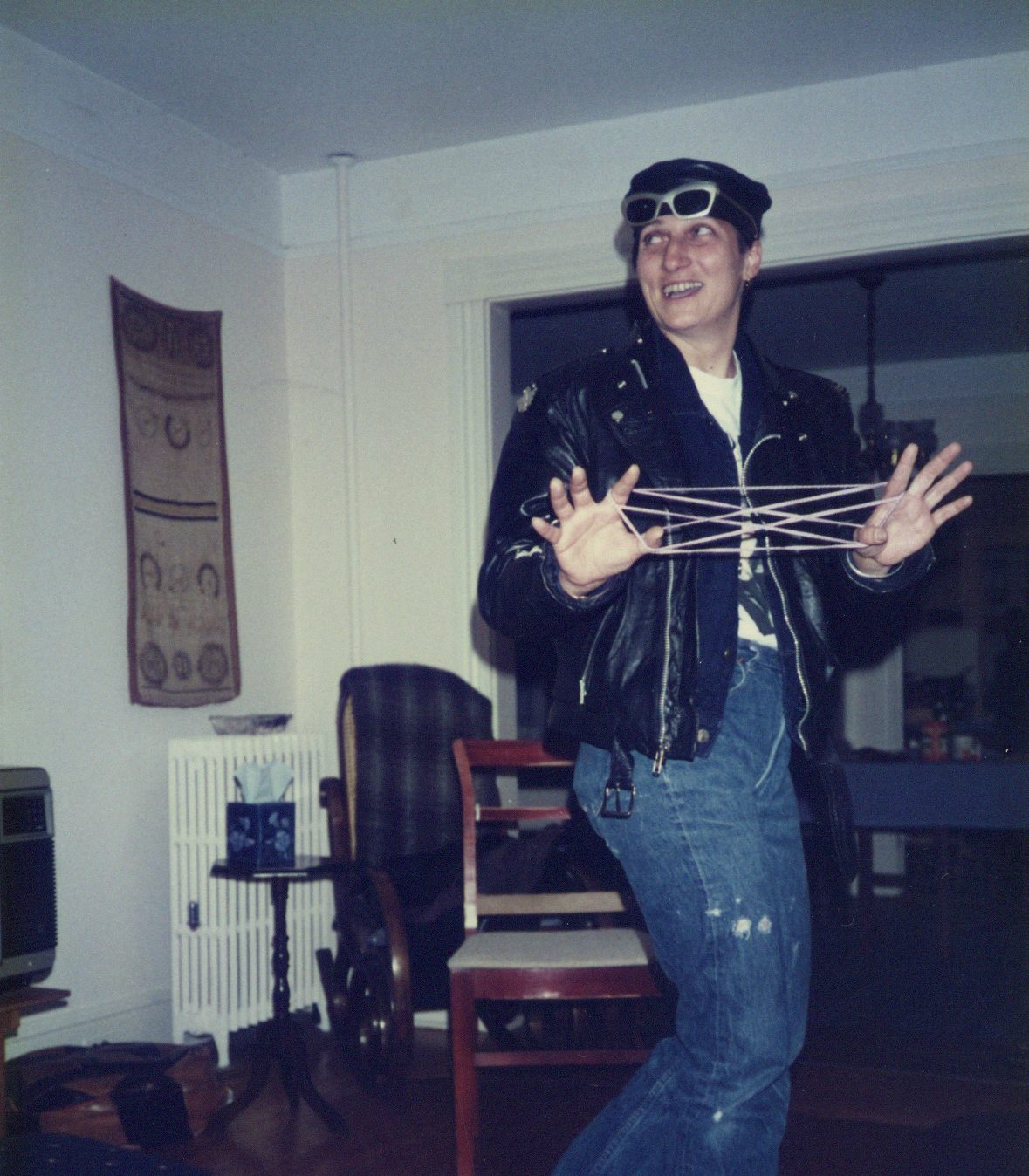
Nathalie Magnan at Santa Cruz, 1980′ © Fonds Nathalie Magnan, INHA-Collection Archives de la critique d’art, Rennes.


Nathalie Magnan at Santa Cruz, 1980′ © Fonds Nathalie Magnan, INHA-Collection Archives de la critique d’art, Rennes.


Magnanrama : Portraits, Networks, and News of Nathalie Magnan
Scenography: Cécile Bouffard
Graphic design: Clara Pasteau
With the complicity of Reine Prat
A media theorist, filmmaker, cyberfeminist, navigator of seas and internets, Nathalie Magnan (1956–2016) contributed in a transdisciplinary, vibrant and generous way to the history of thought, media and technologies, feminism, and LGBTQI+ struggles. A teacher, webmistress, hacktivist, and artist—though she never claimed that title—Nathalie Magnan played a crucial role as a connector between geographic scenes, intellectual and activist communities, and disciplinary fields that rarely intersect or enter into dialogue. Favouring collective work, with feminist and rhizomatic methodologies in which do-it-yourself practices were both empowering and contagious, Nathalie Magnan consistently worked toward collecting, bringing together and intersecting images, texts, people, struggles and machines.
As a student at the University of California, Santa Cruz in the 1980s, she worked as an assistant to philosopher and historian of science Donna Haraway, and later translated into French Haraway’s seminal essay A Cyborg Manifesto. Nathalie Magnan was also involved in the public-access television collectives Paper Tiger Television and Deep Dish Television. After returning to France in the 1990s, she directed several films, including Lesborama for Canal+’s first Nuit Gay in 1995. A co-founder and for a time president of the Paris Gay & Lesbian Film Festival (now Chéries-Chéris), and a contributor to the magazine Gai Pied, she later became a professor at the École nationale supérieure d’art in Dijon, and subsequently in Bourges.
Deeply engaged in cyberfeminist, tactical media and hacktivist circles, Nathalie Magnan organised digital counterculture events, moderated feminist mailing lists, coded websites, wrote and translated texts, and coordinated collective publications. In 2000, in response to the International Symposium on Electronic Art (ISEA) held in Paris without a single woman speaker, she organised an ISEA Off event in a women-only format at the Information and Documentation Centre of the École nationale supérieure des Beaux-Arts de Paris. In 2004 and 2005, in Finland and later in the Strait of Gibraltar, she organised two sea crossings entitled Sailing for Geeks, bringing together artists and activists around communication technologies, thereby drawing a parallel between sailing at sea and navigating the web.
Nathalie Magnan passed away at the age of sixty following metastatic breast cancer. She leaves behind a legacy of struggles around gender and technologies, incisive reflections on how media shape our worldviews, a deep belief in each individual’s agency to produce their own representations, a participatory methodology of inquiry, and a sharp sense of humour. Many of those who knew her wonder what she would have thought, written, or done in relation to our present moment: social networks to which we entrust our intimate lives and data; a pandemic that has reshaped our relationships to distance and vulnerability; the possibilities of artificial intelligence; mainstream media controlled by the far right; and genocides broadcast live in the palms of our hands. Many are also deeply engaged with her archival collection, deposited at the Archives de la critique d’art in Rennes by her partner Reine Prat—a collection that joyfully blurs the boundaries between private and professional life, institutional culture and self-organisation, activism and transmission, reshuffling the deck of disciplines, genders and questions of legitimacy.
The exhibition is not intended merely as a portrait or a tribute, but rather as a collective biography open to the present—one in which the thinking, struggles and bridges that Nathalie Magnan created resonate across different generations of artists and thinkers.
Nathalie Magnan
A media theorist, filmmaker, cyberfeminist, sailor of seas and internets alike, Nathalie Magnan (1956–2016) accompanied the history of thought, media, and technologies—as well as feminism and LGBTQI+ struggles—in a transdisciplinary, vibrant, and generous way. A teacher, webmaster, hacktivist, initiator of festivals and events, an artist without ever claiming the title, Nathalie Magnan played a vital role as a bridge between geographic scenes, intellectual and activist communities, and disciplinary fields that rarely intersect or enter into dialogue. Often working collectively, through feminist and rhizomatic methodologies in which do-it-yourself practices were both encouraged and contagious, she consistently worked toward gathering, connecting, and cross-pollinating images, texts, people, struggles, and machines.
An assistant to Donna Haraway during her studies at the University of California, Santa Cruz, and later the translator of the Cyborg Manifesto, Nathalie Magnan took part in the independent media collectives Paper Tiger TV and Deep Dish TV, and directed several documentary films, notably Lesborama for Canal+ in 1995.
President and co-founder of the Paris Gay and Lesbian Film Festival (which later became Chéri·es Chéris), she taught at several universities in the United States and France before becoming a professor at the École nationale supérieure d’art de Dijon, and later in Bourges. Her interest in technologies—always firmly grounded in the present—later intertwined with cyberfeminism, tactical media, and hacktivism, without ever separating the organization of digital counterculture events from moderating feminist mailing lists, coding websites, or writing articles and critical texts. In 2000, in response to the International Symposium on Electronic Arts (ISEA) held in Paris without a single woman speaker, she organized an ISEA Off in self-selected gender-based participation at the Documentation and Information Center of the École des Beaux-Arts de Paris.
An exhibition co-produced by Villa Arson, Nice (20 February – 31 May 2026); Centre d’art contemporain Les Capucins, City of Embrun (26 June – 23 August 2026); and Bétonsalon – Centre for Art and Research, Paris, in partnership with Archives de la critique d’art / Université Rennes 2.

