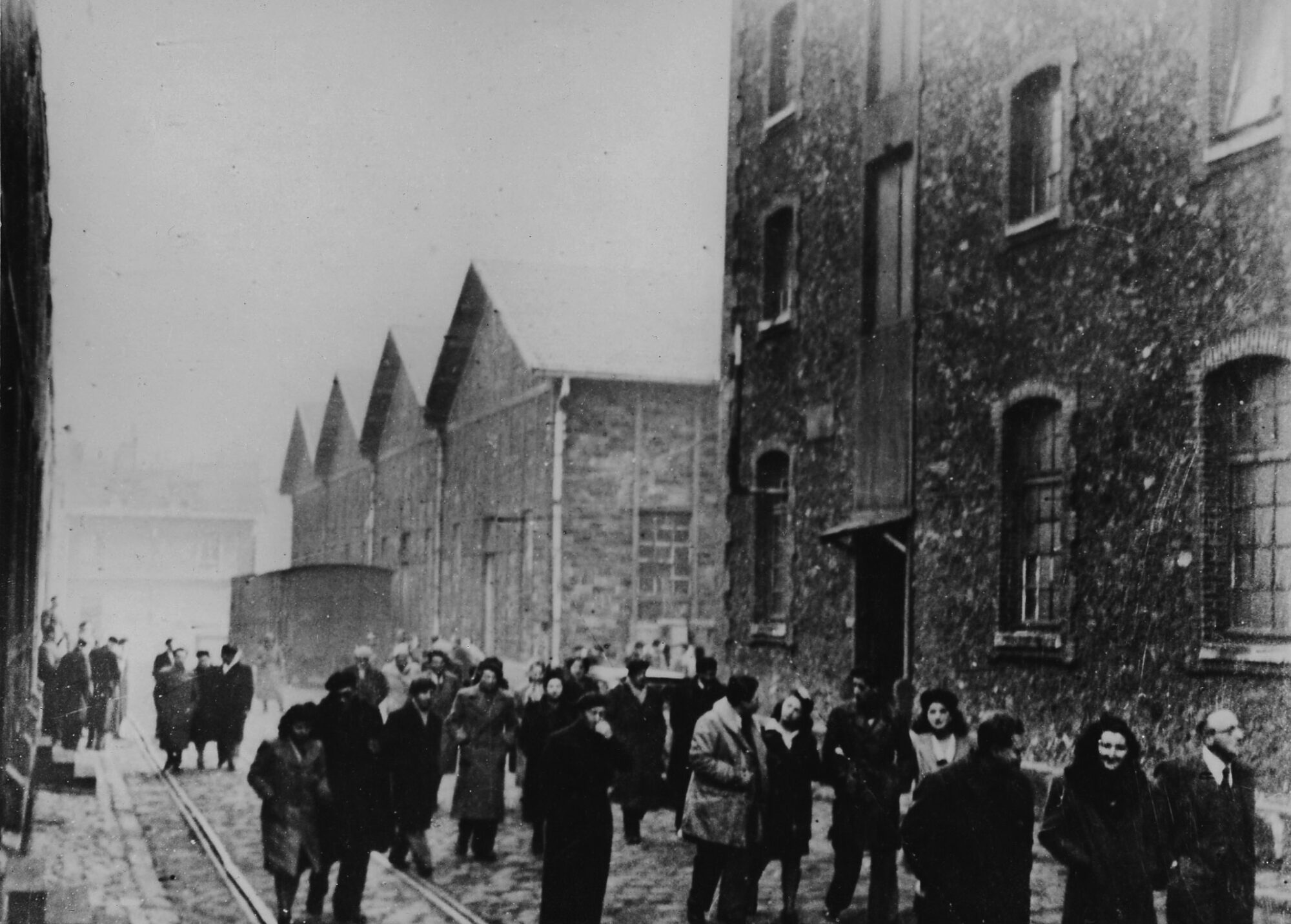
Walk of the internees at 43 quai de la Gare.

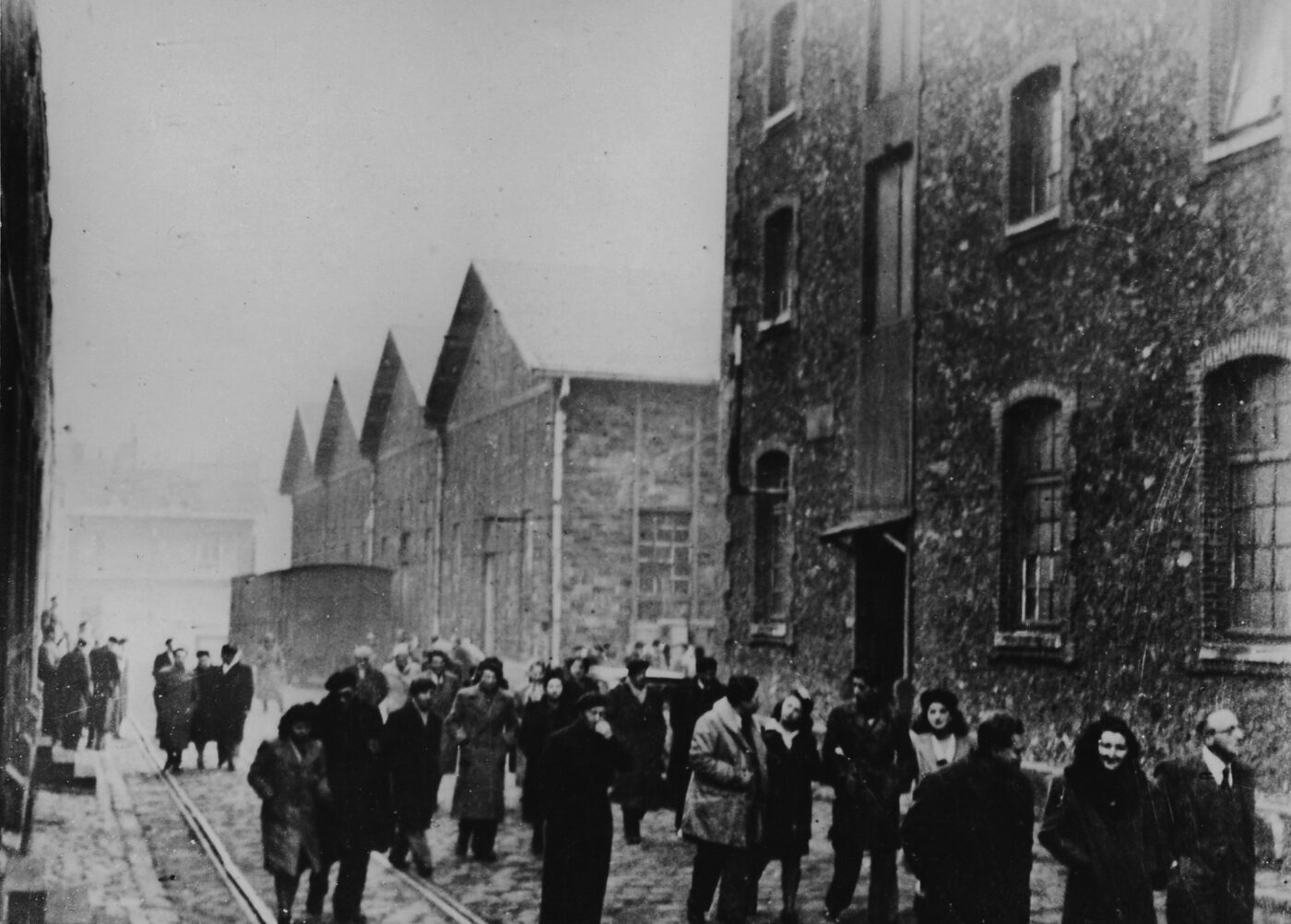

Walk of the internees at 43 quai de la Gare.


A survey of archives collected by Dominique Dehais
Knowledge of the Drancy annex camps established within Paris proper from July 1943 until the Liberation sheds light on the system put in place by the occupying forces to carry out the plundering of property belonging to Jews deported to the concentration and extermination camps in Eastern Europe. The existence of these camps remains largely unknown to Parisians, both in terms of their locations and functions and the conditions under which they operated. Having moved into the Frigo building at 91 quai de la Gare in the early 1980s, a working group called CREA was formed, comprising Dominique Dehais, Marie Guastalla, Claude Bensignor, Maurice Bachet, and Marguerite Fatus, with the aim of exploring potential sites for collective artistic workspaces. It was within this context that they began their investigations into the camp at 43 quai de la Gare, located close to the Frigo. Today, the Paris Rive Gauche district has overlaid the remains of the neighbourhood’s industrial past with its urban design. The last traces of the Austerlitz Camp disappeared in 1997. The Halle aux farines, rebuilt on the exact site of the Entrepôts Généraux where the camp once stood, is now part of the Paris VII campus; the private mansion at 3 rue Bassano is still there; and an advertising agency has taken up residence on rue Saint-Martin in the former Lévitan store. On Saturdays and Sundays, when industrial activity was still present in the quai de la Gare area, a strange enclave of silence would descend over the neighbourhood during the weekly shutdown. On weekends in this new piece of city, what remains is that silence.
Dominique Dehais
Dominique Dehais’s work revolves around the notions of fabrication and production in the worlds of art, architecture and design, exploring the relationships between object (product, artwork) and subject (producer, creator), as well as the mechanisms of emancipation or social subjugation that underpin them. The connections between the fields of production and art, along with an engagement with questions of the human and its place in the production of social values, drive his investigations in terms of both research and artistic practice. From art to architecture, by way of design and industry, systemic aestheticisation — examined elsewhere in the Territoires Esthétiques seminar — as a form of capturing the will towards transindividuation, offers an opportunity to understand and reveal the models that shape the conception of our technical and sensory environments as a condition of existence for the living milieux of being.

