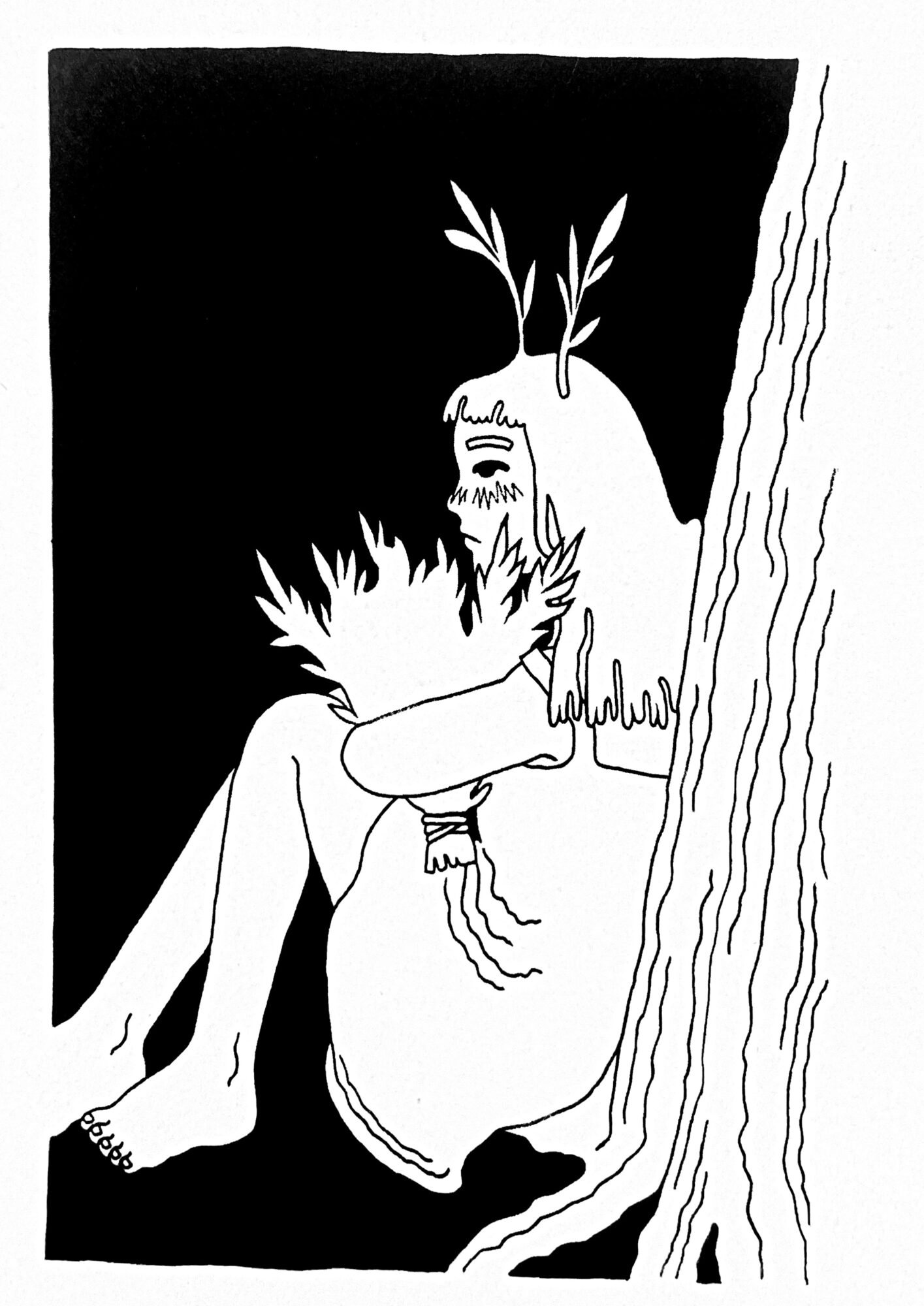
10*herbs, Manon Hoarau.


10*herbs, Manon Hoarau.


LANDE The Languages of Ecological Distress
With Maylis de Kerangal
A project initiated by Cécile Narjoux (Department of Literature, Arts, and Film, Université Paris Cité)
How do we write about ecological distress? How do we put into words the emotions, perceptions, and upheavals in our relationship with the world brought about by contemporary ecological changes?
Alongside writer Maylis de Kerangal, four sessions will invite participants to experiment with different forms of writing to explore how our lived experience of climate change affects the ways we feel, imagine, and tell stories. Texts, images, artworks, and sensory experiences will fuel this collective project.
The creations resulting from the workshop will lead to the design of a booklet edition, to be presented during a public evening featuring a reading of the texts at Bétonsalon. The program will conclude with a screening and discussion of Take Shelter (Jeff Nichols, 2011) at the Nouvel Odéon, in partnership with the Barberousse film club.
Free with pre-registration at culture@u-pariscite.fr
Open to master’s and doctoral students regardless of their field of study and with no other prerequisites.
Regular attendance is required.
Before registering, please make sure you are available for all sessions:
Thursday, October 1 • 4:00 p.m. – 7:00 p.m.
Thursday, October 15 • 4:00 p.m. – 7:00 p.m.
Thursday, November 26 • 4:00 p.m. – 7:00 p.m.
Thursday, January 14 • 4:00 p.m. – 7:00 p.m.
Maylis de Kerangal
Maylis de Kerangal is a French writer born in 1967 in Toulon. Her father was a ship’s pilot and her grandfather a sea captain, which has left its mark on her work. She studied history, philosophy, and ethnology in Paris. She is the author of numerous novels, short story collections, novellas, and narratives, including: In 2008, she wrote Corniche Kennedy, a luminous work about youth in Marseille. In 2010, her novel Naissance d’un pont won the Prix Médicis. It explores the construction of a gigantic bridge and the lives of those involved in this colossal project. She is also the author of Réparer les vivants (2014), a novel that won several literary awards, including the Prix Orange du Livre, the Grand Prix RTL-Lire in France, and the Wellcome Book Prize in the United Kingdom. It tells the story of a young man who died in a car accident and the chain of events that follows, involving organ transplantation. In 2021, she contributed to an anthology in support of the International Prison Observatory, titled Pour que droits et dignité ne s’arrêtent pas au pied des murs. Jour de ressac (2024) is a novel that immerses the reader in the memories and emotions associated with the city of Le Havre, where the author grew up. That same year, she was nominated for the Fnac Novel Prize and the Goncourt Prize for High School Students. Her work is marked by the influence of places, the theme of landscape, archaeology, the use of documents and investigative techniques, and the motif of the double. She is interested in the world of work, the futures of young people, the human voice, and the presence of ghosts.
LANDE – The Languages of Ecological Disarray is a project initiated by Cécile Narjoux (UFR LAC), supported by the S&H Interdisciplinary Incubator – Project Studio (PUI Valocité), and organized in collaboration with Bétonsalon – Center for Art and Research.

