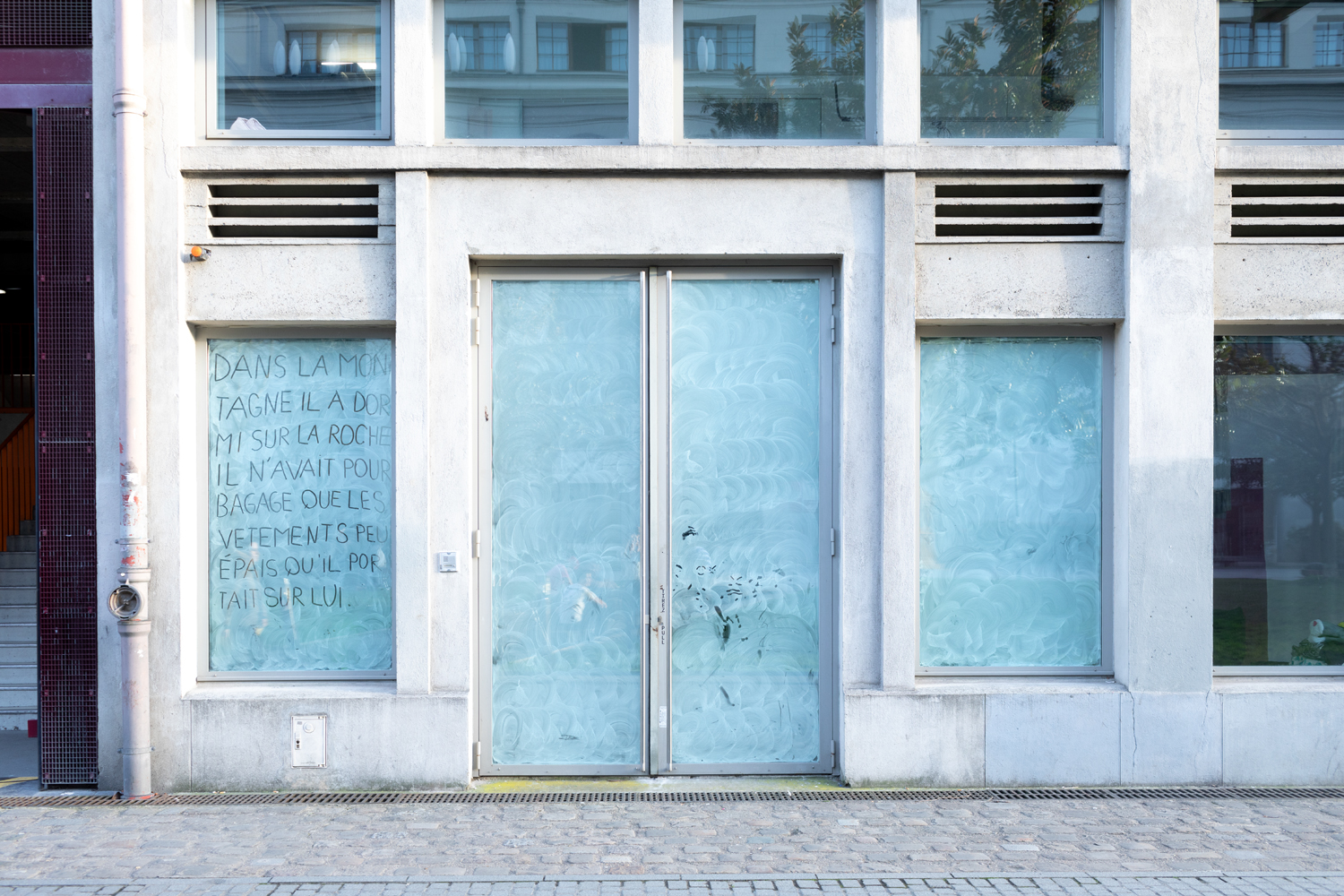
View of the exhibition “Hibou TV Show” by Jean-Alain Corre, Bétonsalon – Centre for Art and Research, Paris, 2026. Photo: Nadezhda Ermakova.

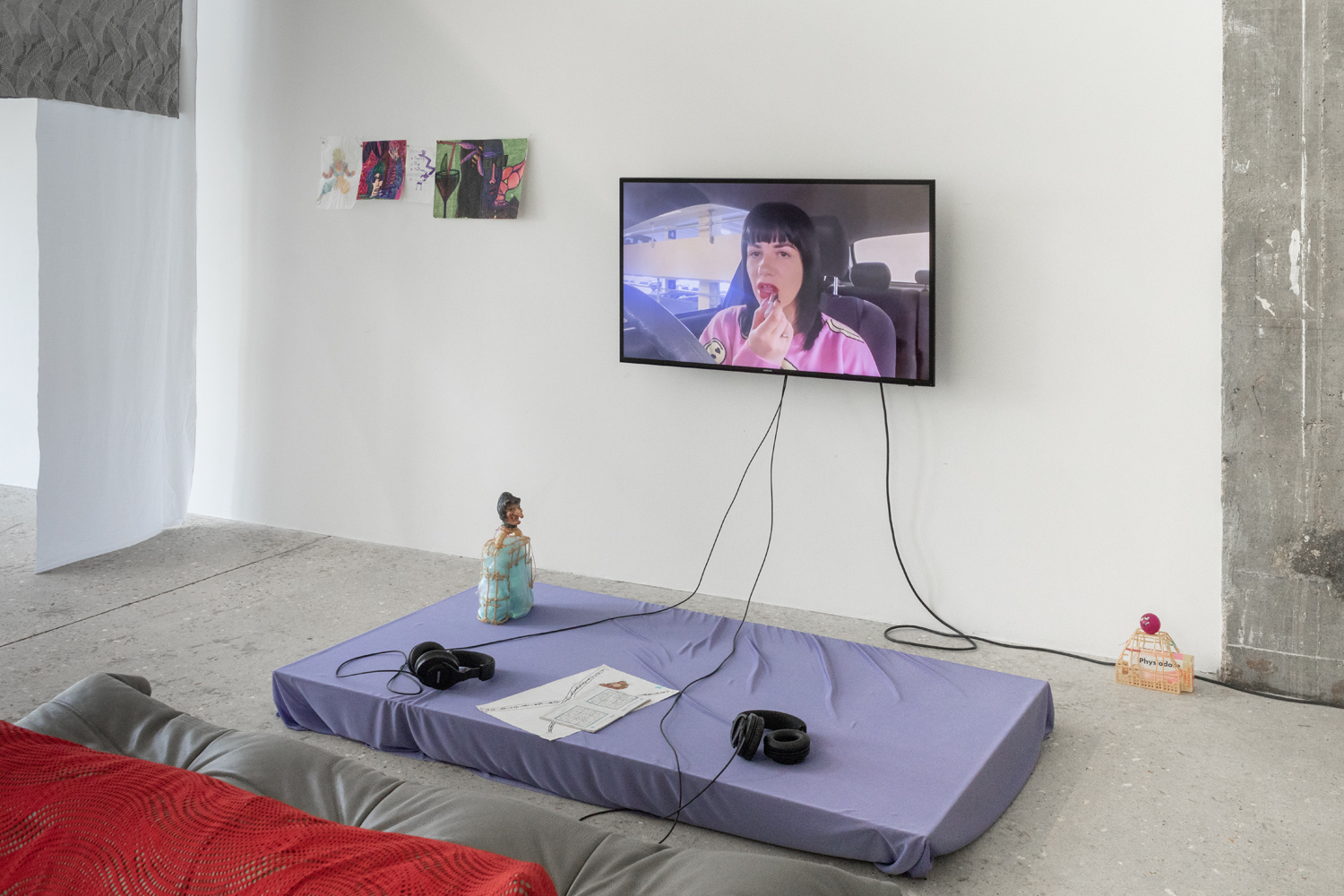
View of the exhibition “Hibou TV Show” by Jean-Alain Corre, Bétonsalon – Centre for Art and Research, Paris, 2026. Photo: Nadezhda Ermakova.
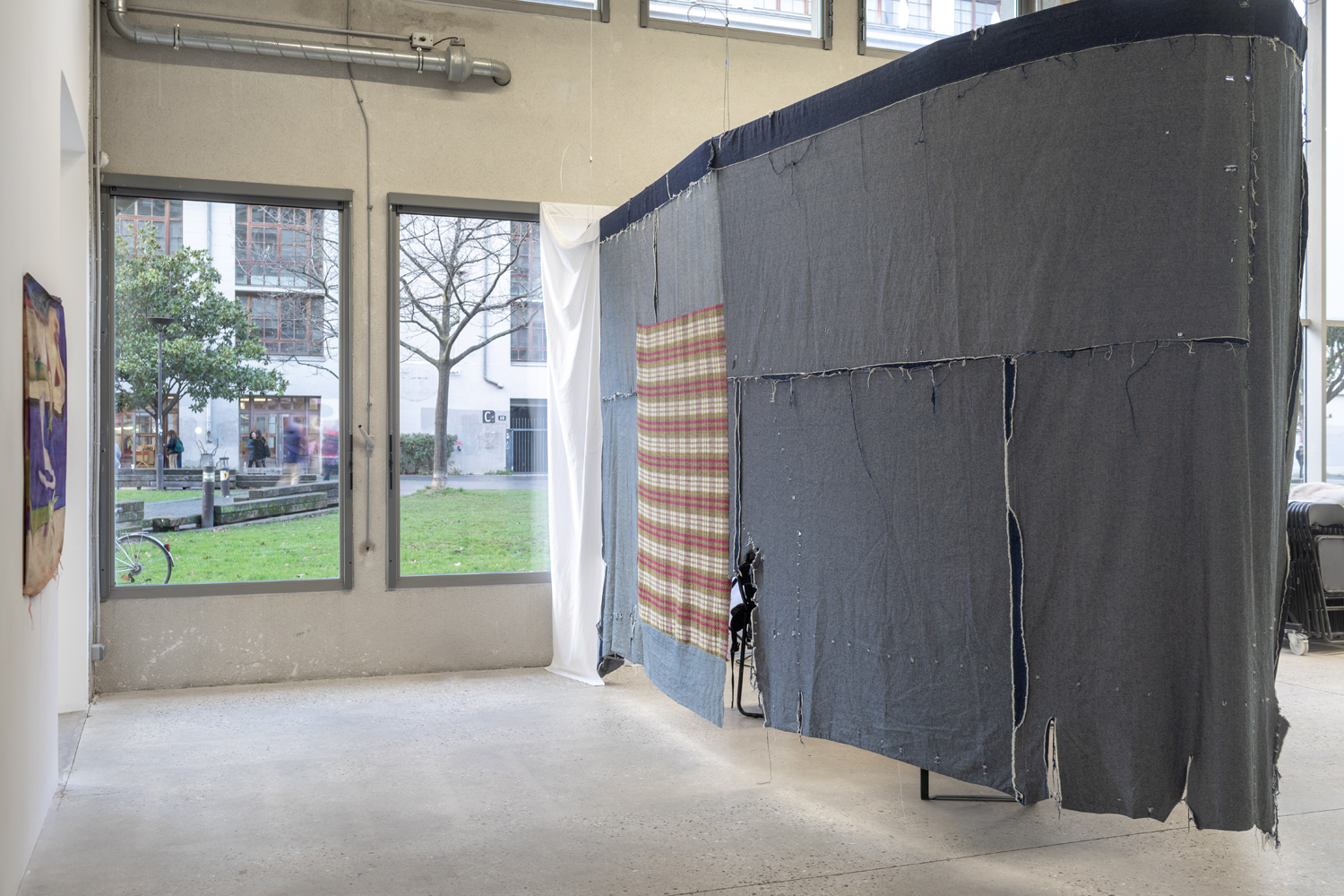
View of the exhibition “Hibou TV Show” by Jean-Alain Corre, Bétonsalon – Centre for Art and Research, Paris, 2026. Photo: Nadezhda Ermakova.
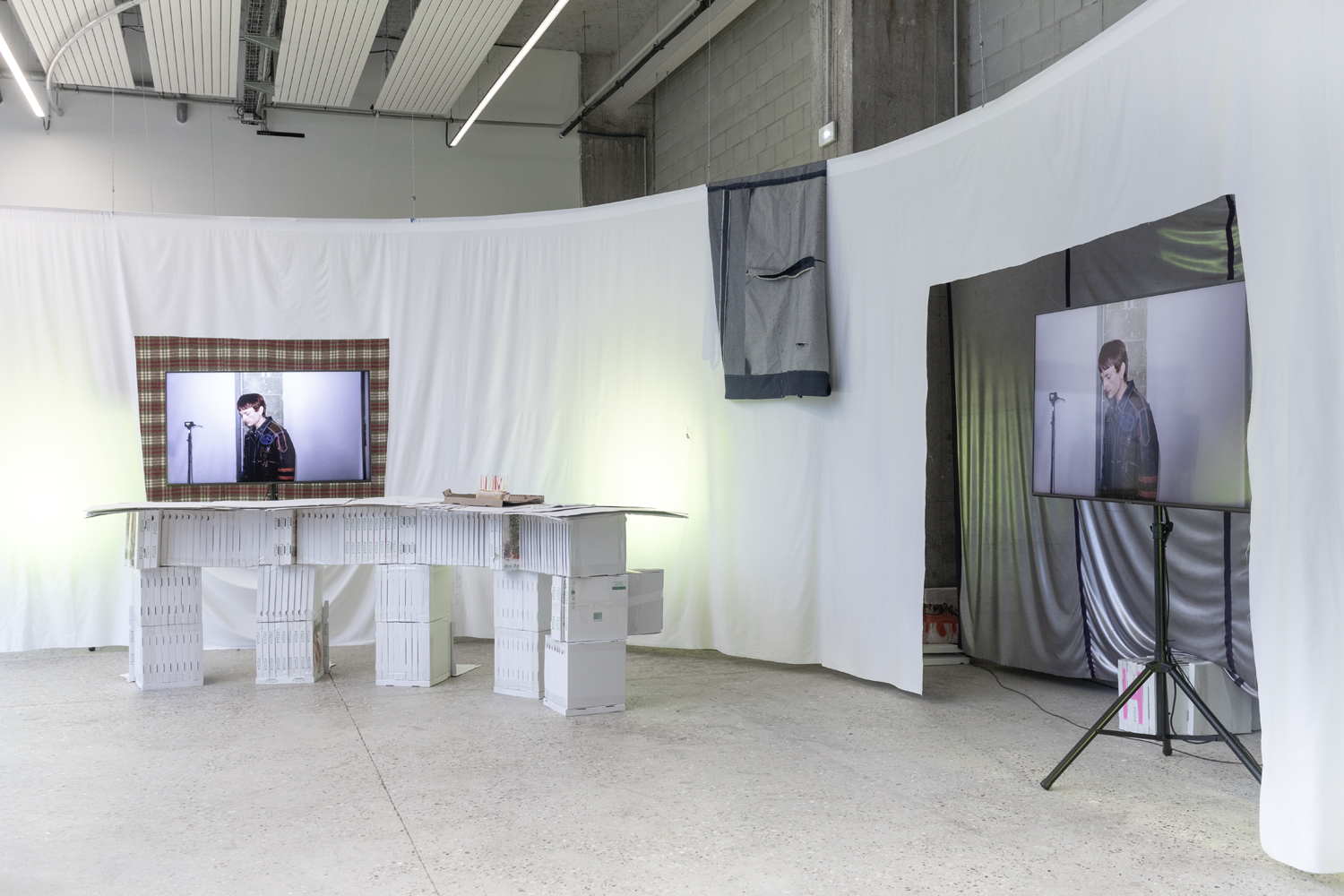
View of the exhibition “Hibou TV Show” by Jean-Alain Corre, Bétonsalon – Centre for Art and Research, Paris, 2026. Photo: Nadezhda Ermakova.
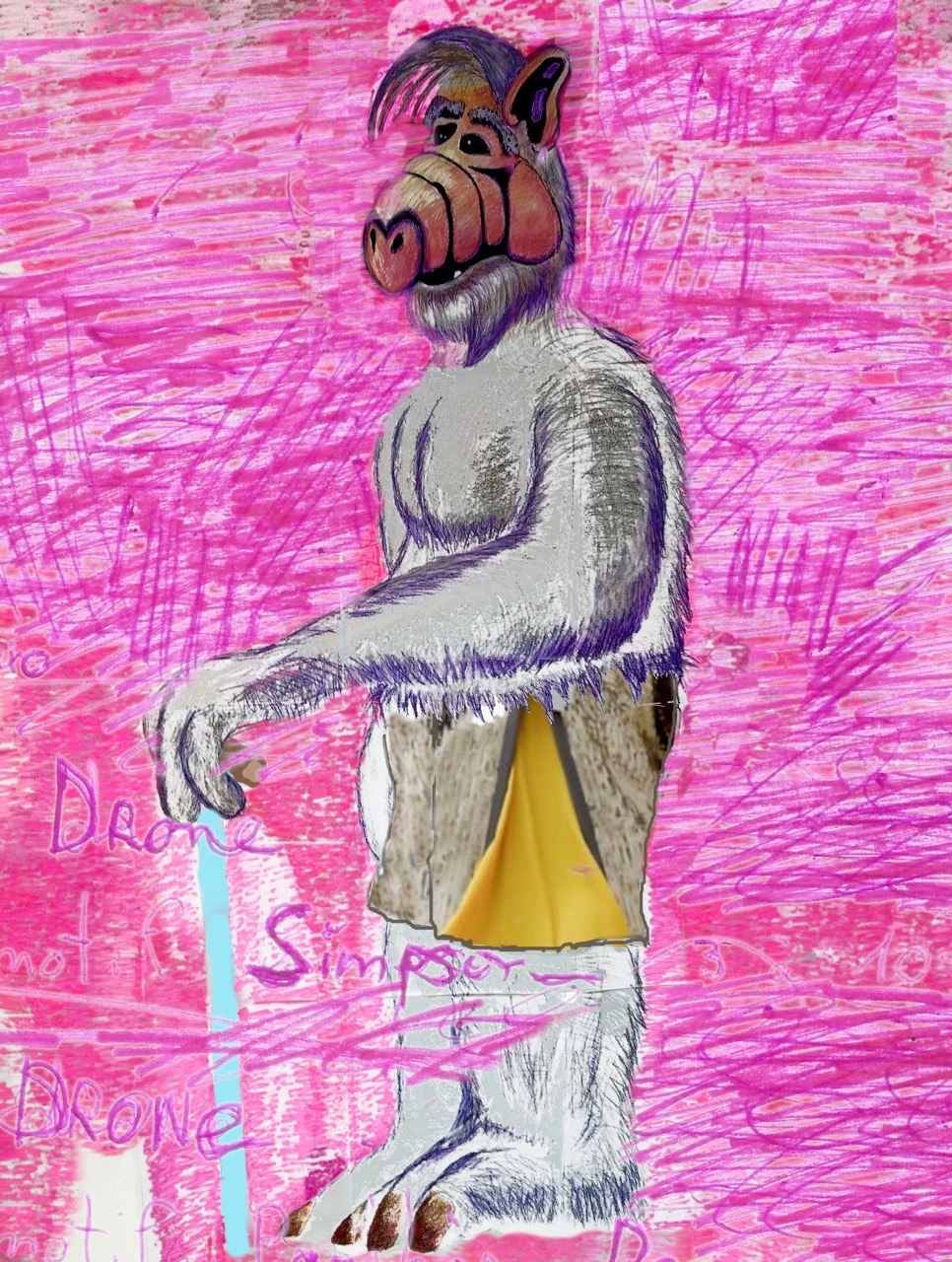
Jean-Alain Corre, working drawing for “Hibou TV Show”, 2025.
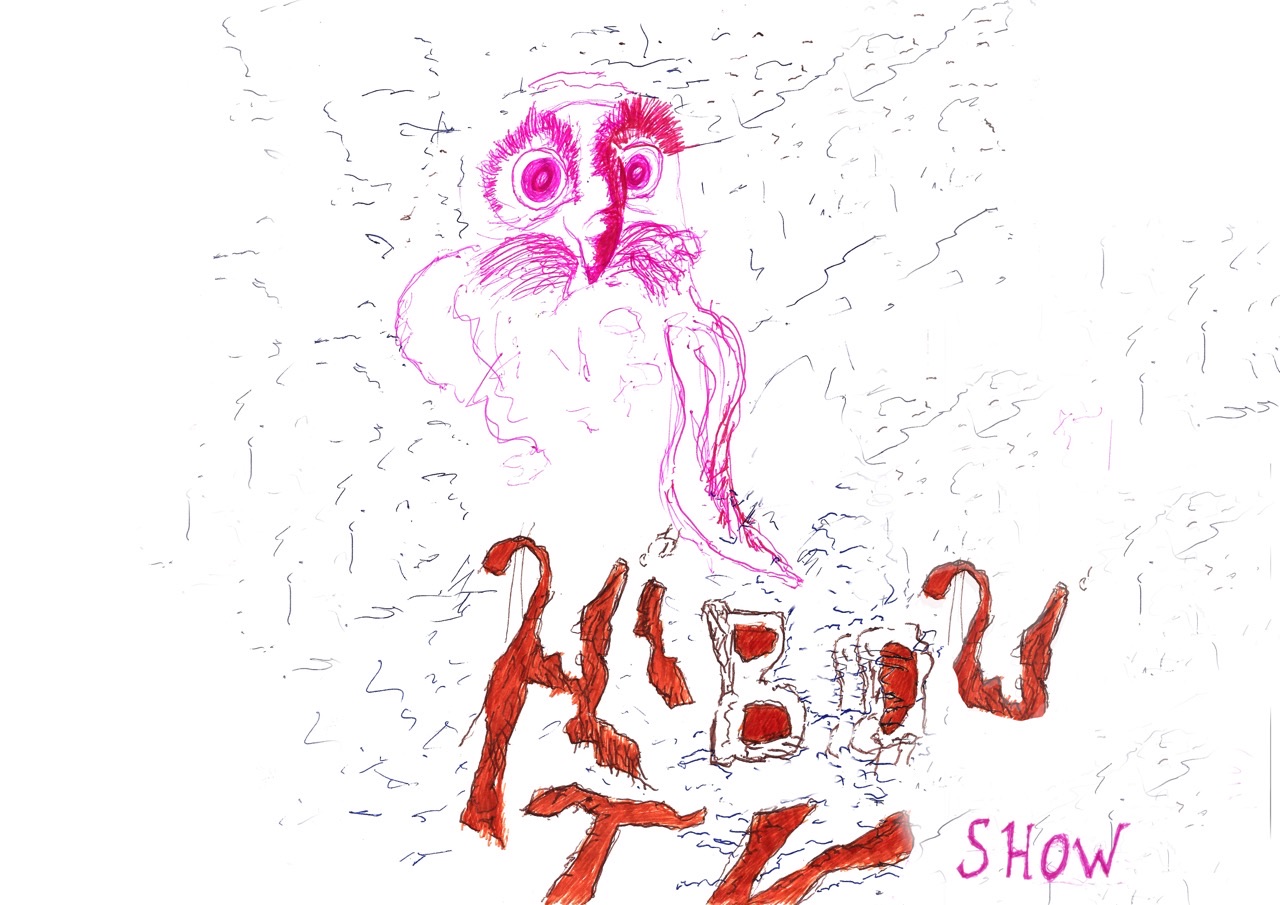
Jean-Alain Corre, working drawing for “Hibou TV Show”, 2025.
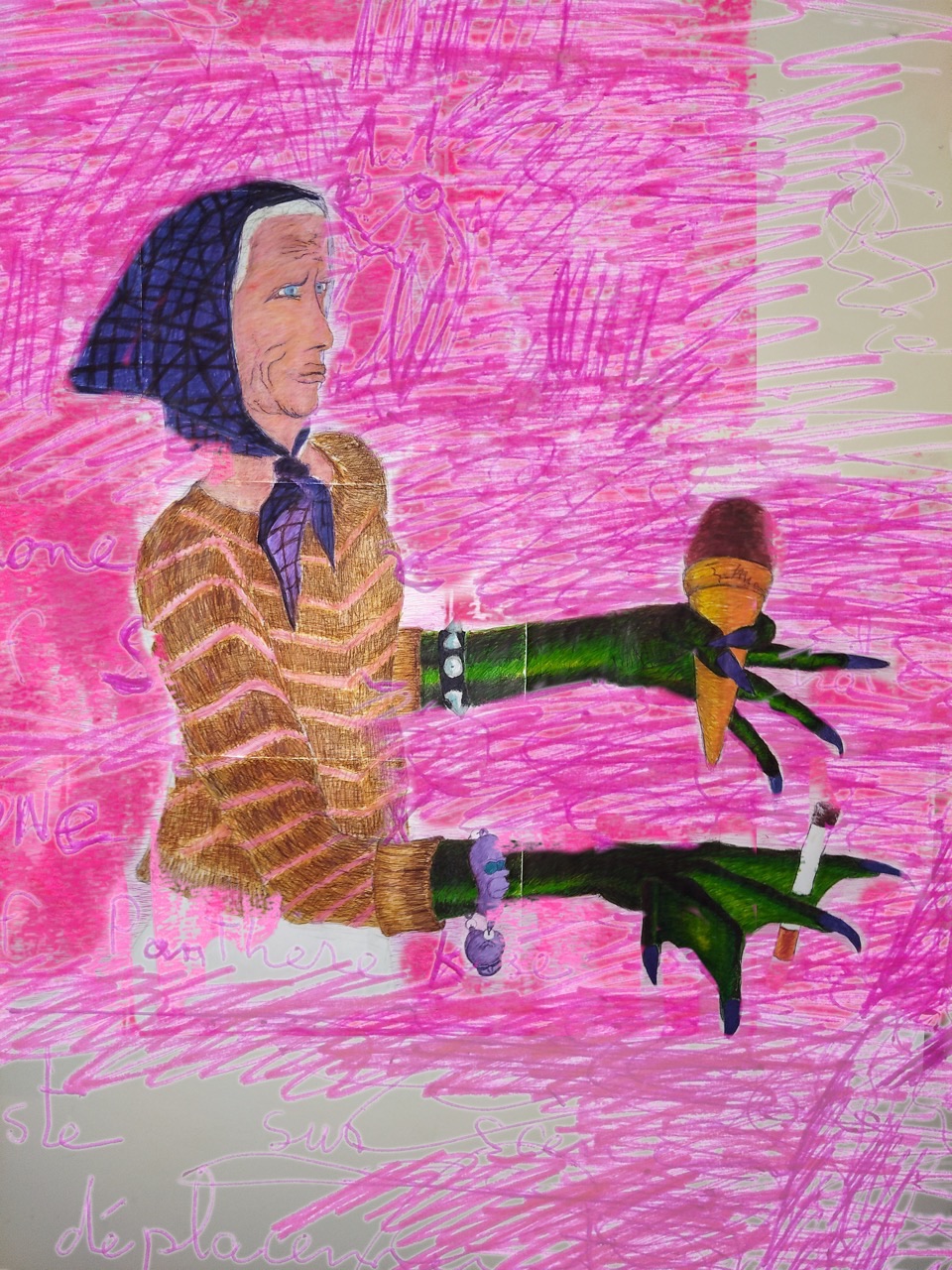
Jean-Alain Corre, working drawing for “Hibou TV Show”, 2025.
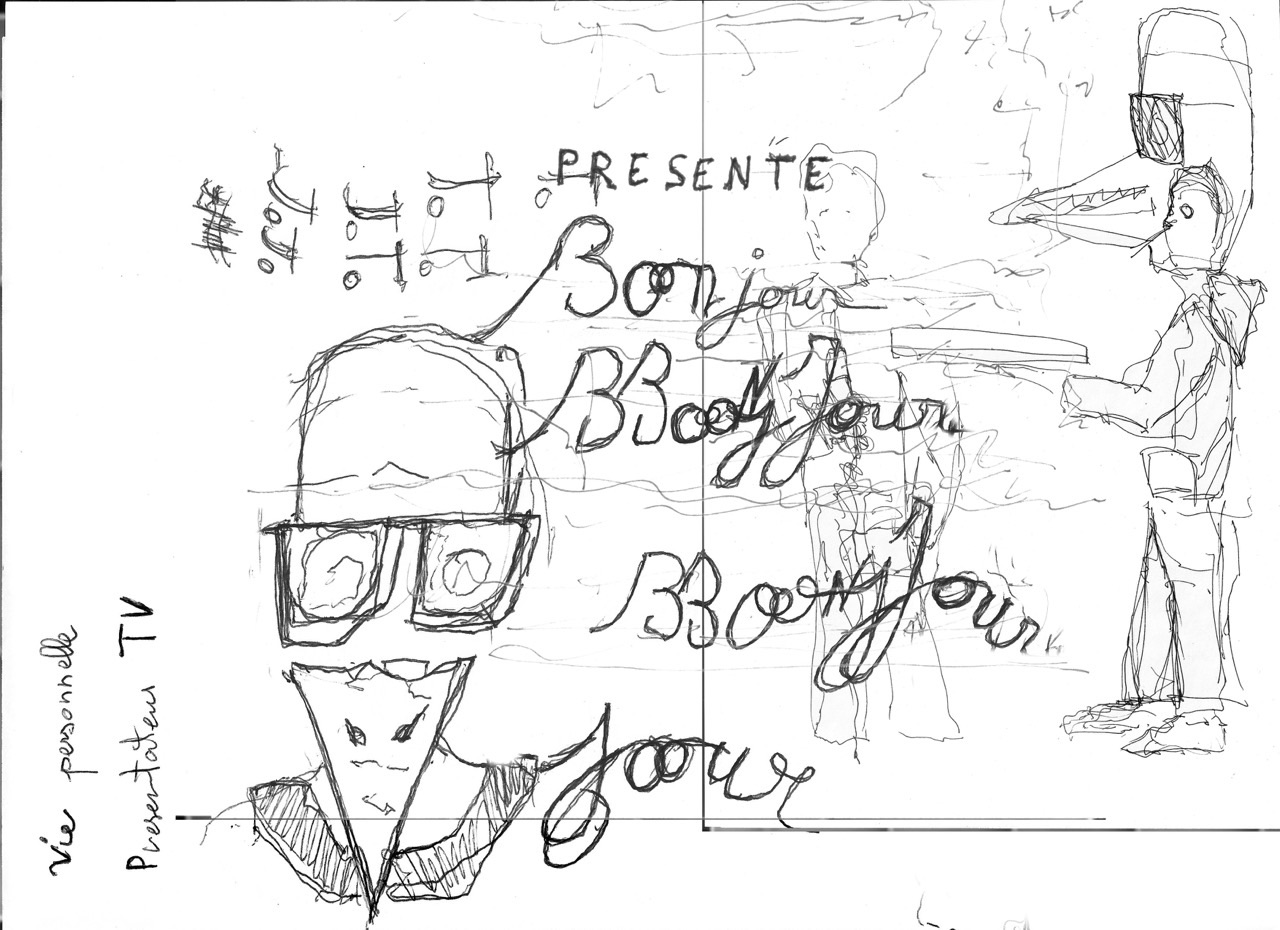
Jean-Alain Corre, working drawing for “Hibou TV Show”, 2025.
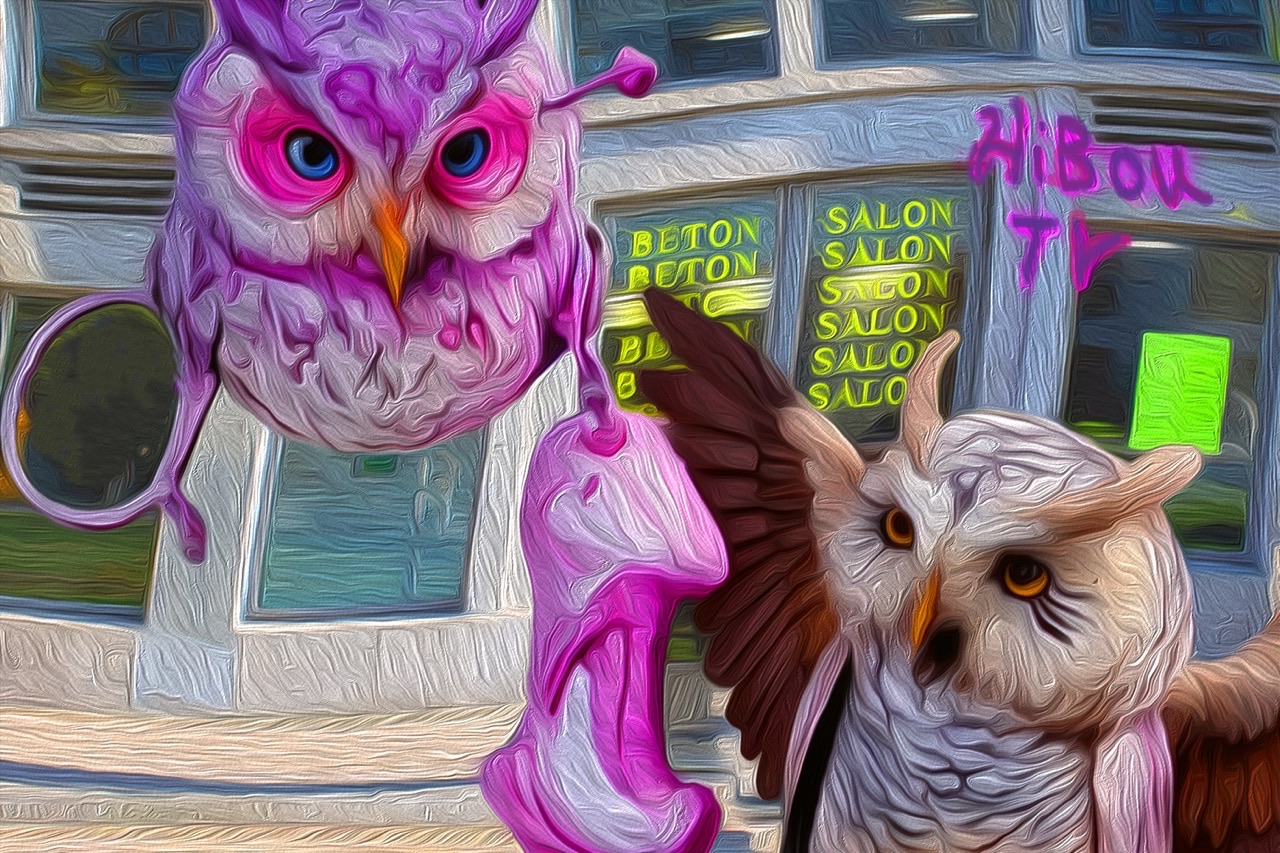
Jean-Alain Corre, visual research by the artist for “Hibou TV Show” generated with the help of artificial intelligence, 2025.
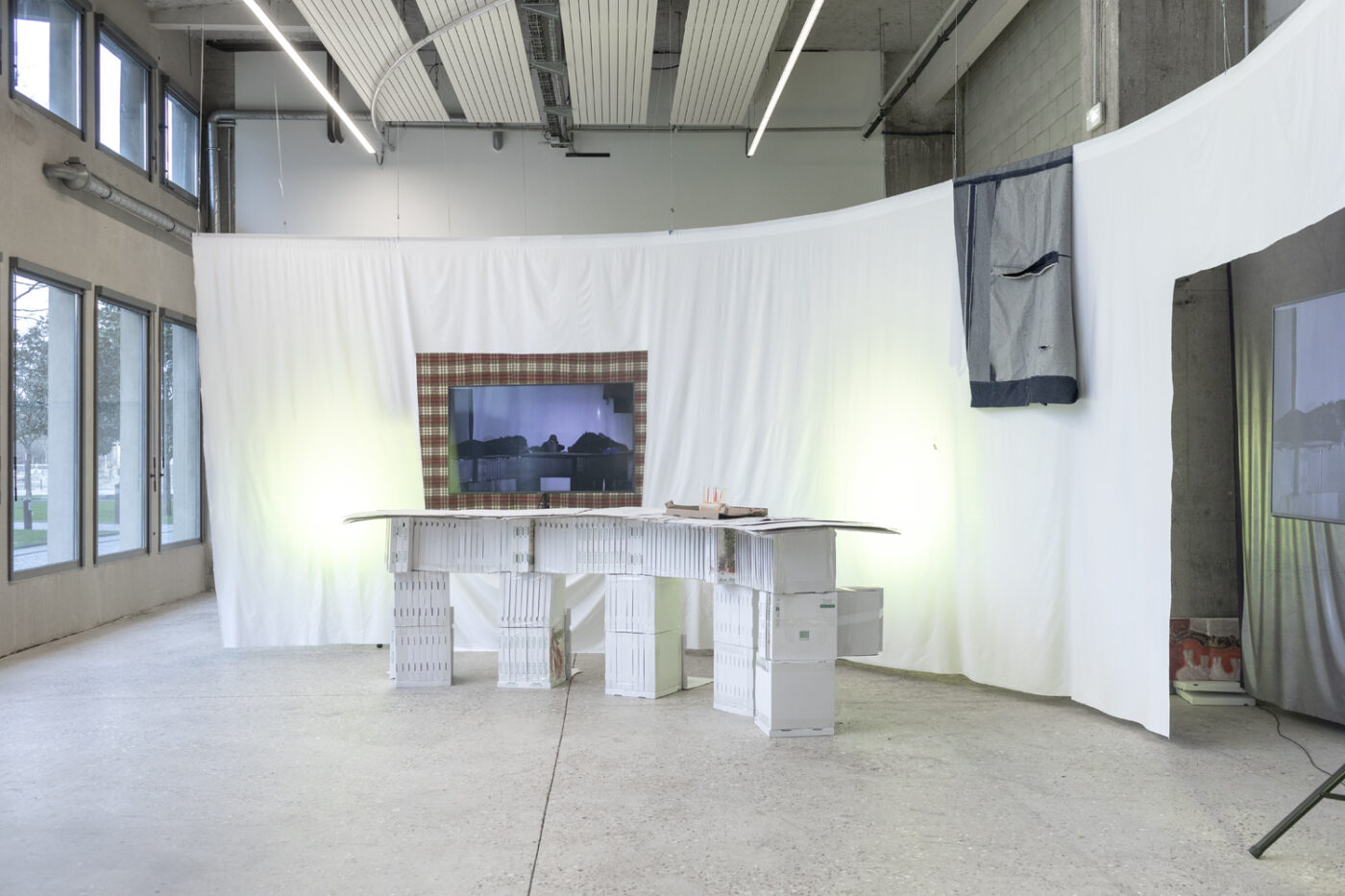
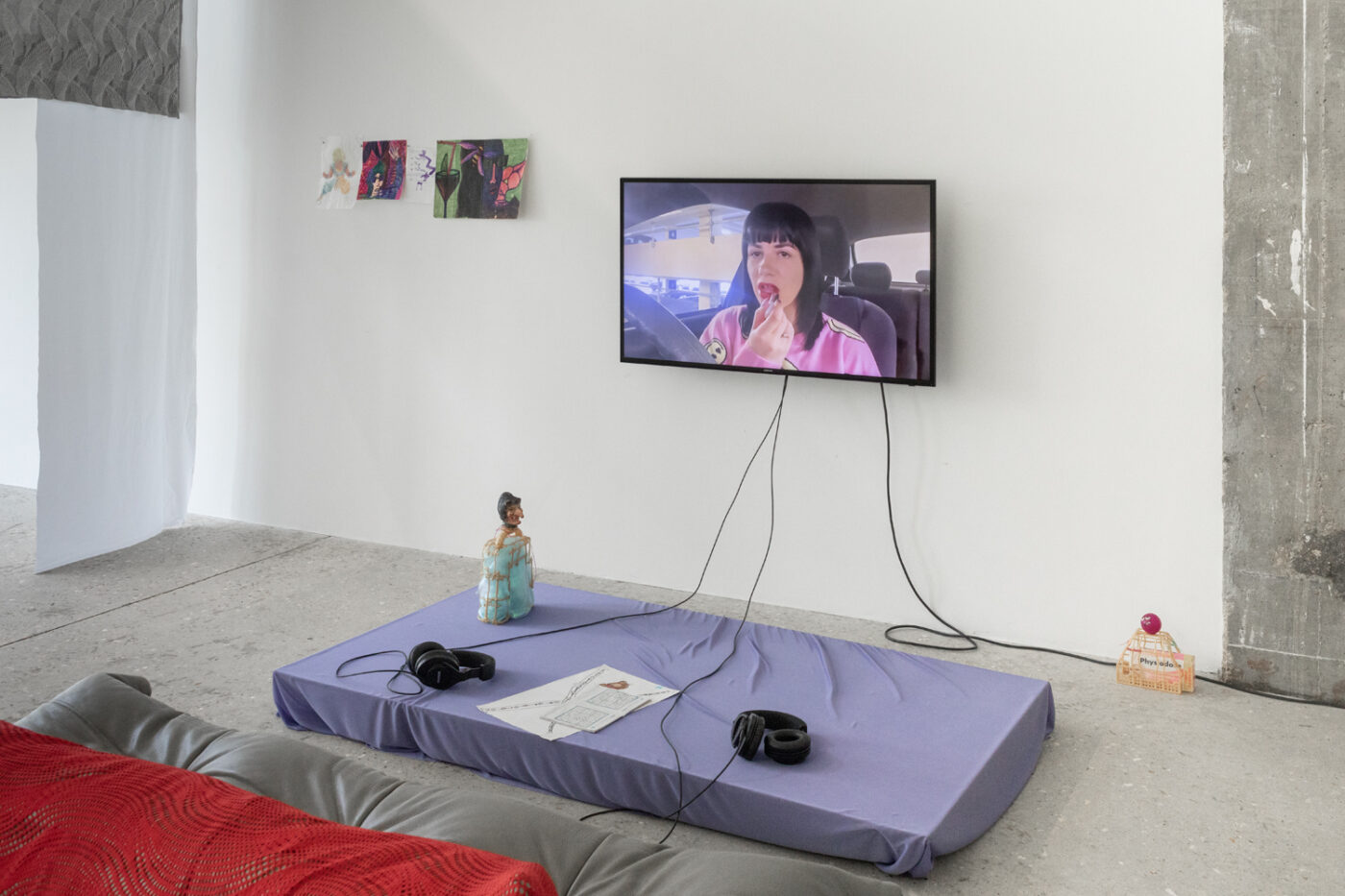
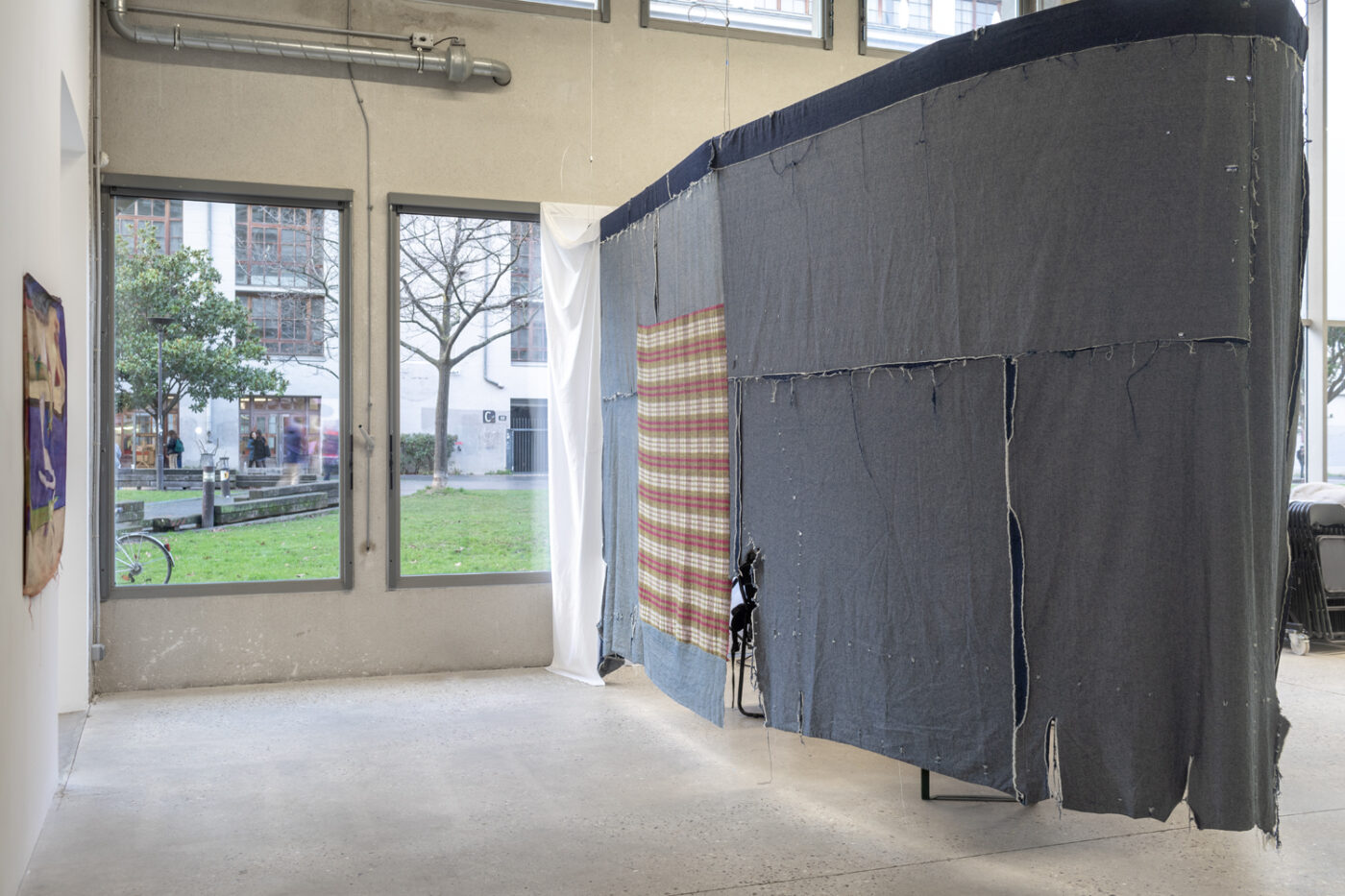
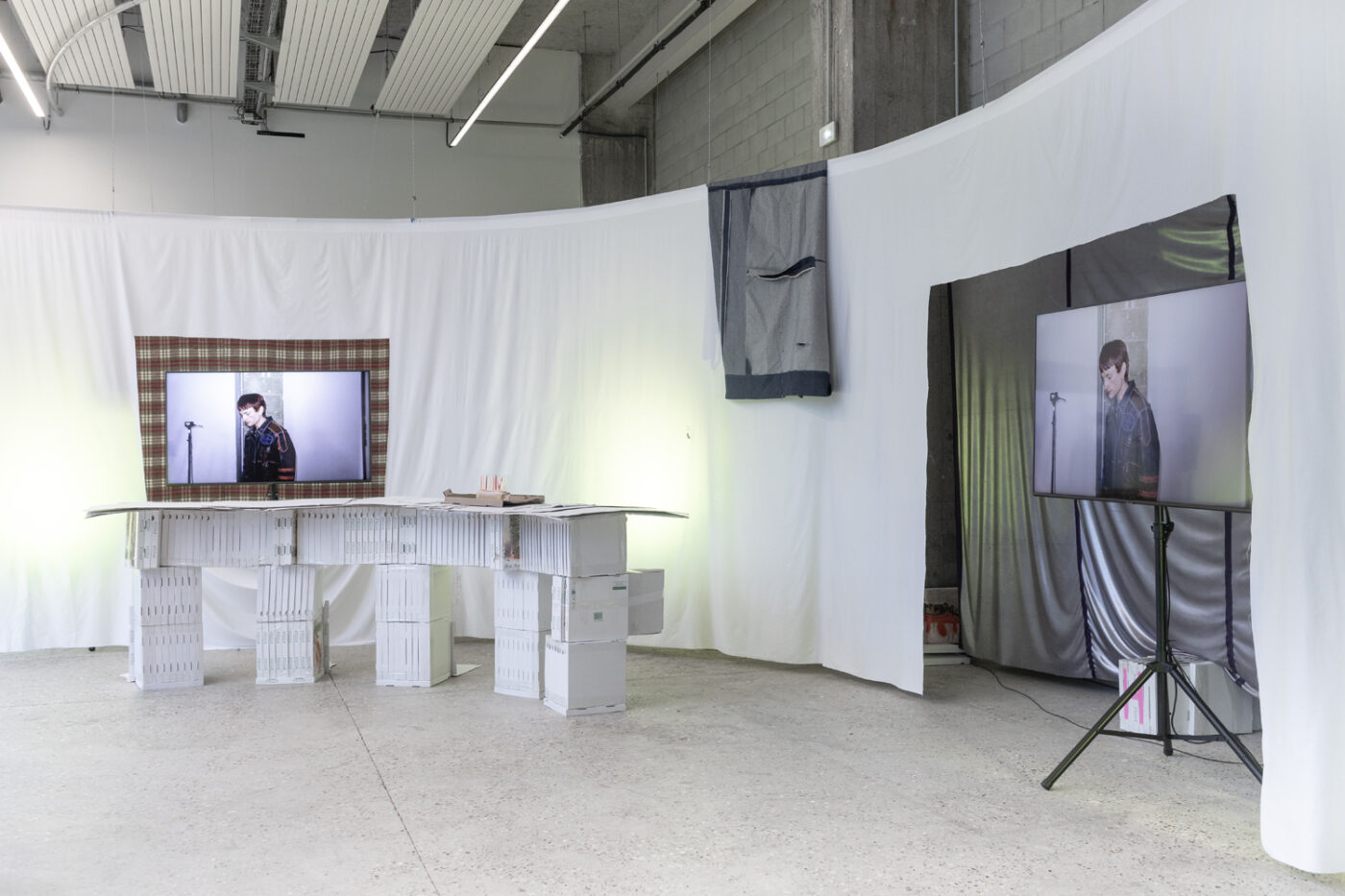

View of the exhibition “Hibou TV Show” by Jean-Alain Corre, Bétonsalon – Centre for Art and Research, Paris, 2026. Photo: Nadezhda Ermakova.

View of the exhibition “Hibou TV Show” by Jean-Alain Corre, Bétonsalon – Centre for Art and Research, Paris, 2026. Photo: Nadezhda Ermakova.
View of the exhibition “Hibou TV Show” by Jean-Alain Corre, Bétonsalon – Centre for Art and Research, Paris, 2026. Photo: Nadezhda Ermakova.
View of the exhibition “Hibou TV Show” by Jean-Alain Corre, Bétonsalon – Centre for Art and Research, Paris, 2026. Photo: Nadezhda Ermakova.
Jean-Alain Corre, working drawing for “Hibou TV Show”, 2025.
Jean-Alain Corre, working drawing for “Hibou TV Show”, 2025.
Jean-Alain Corre, working drawing for “Hibou TV Show”, 2025.
Jean-Alain Corre, working drawing for “Hibou TV Show”, 2025.
Jean-Alain Corre, visual research by the artist for “Hibou TV Show” generated with the help of artificial intelligence, 2025.

Hibou TV Show
A proposition by Jean-Alain Corre with the collaboration of Gaëlle Obiégly
Curators: Vincent Enjalbert, Elena Lespes Muñoz, Émilie Renard
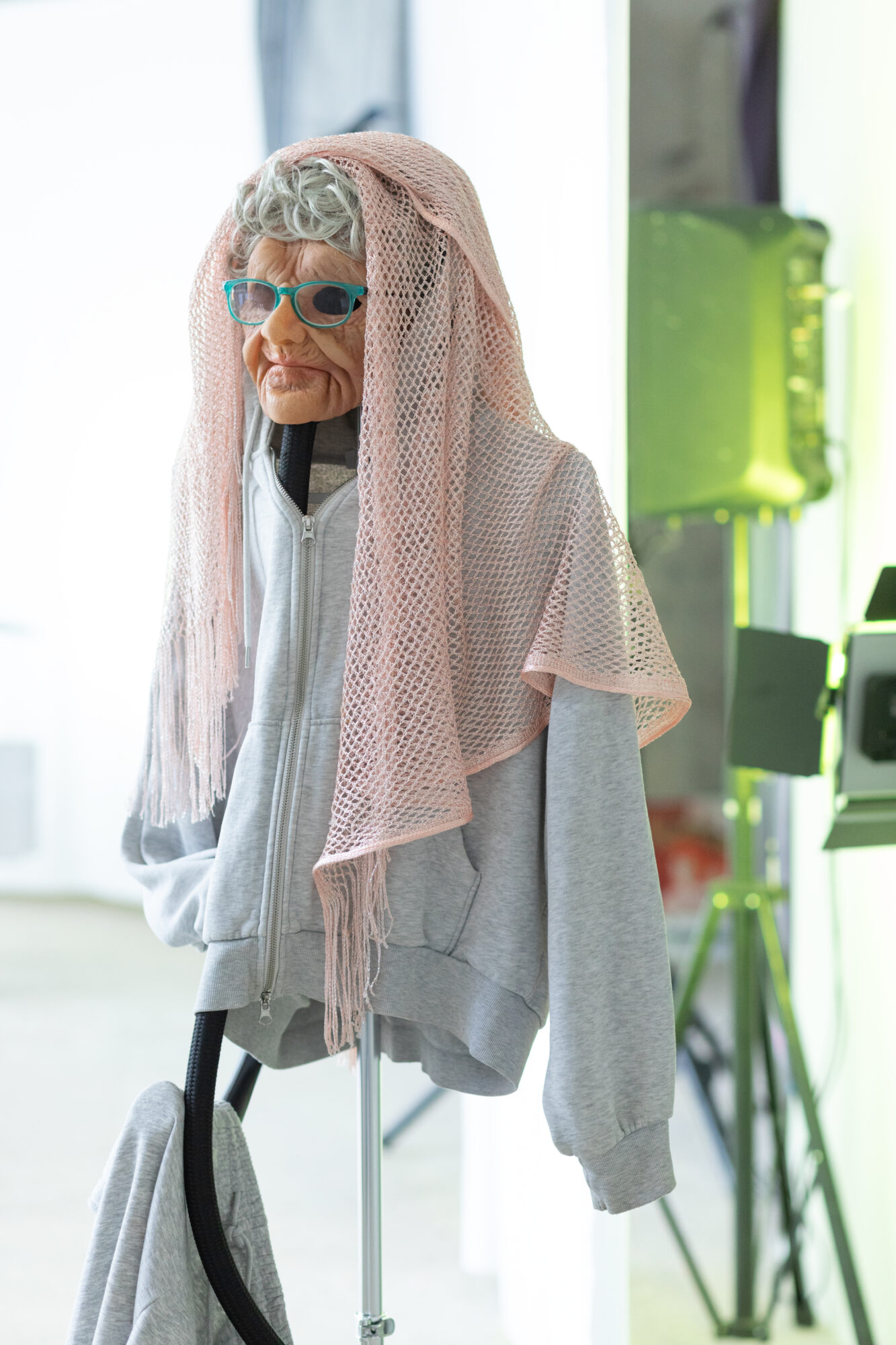
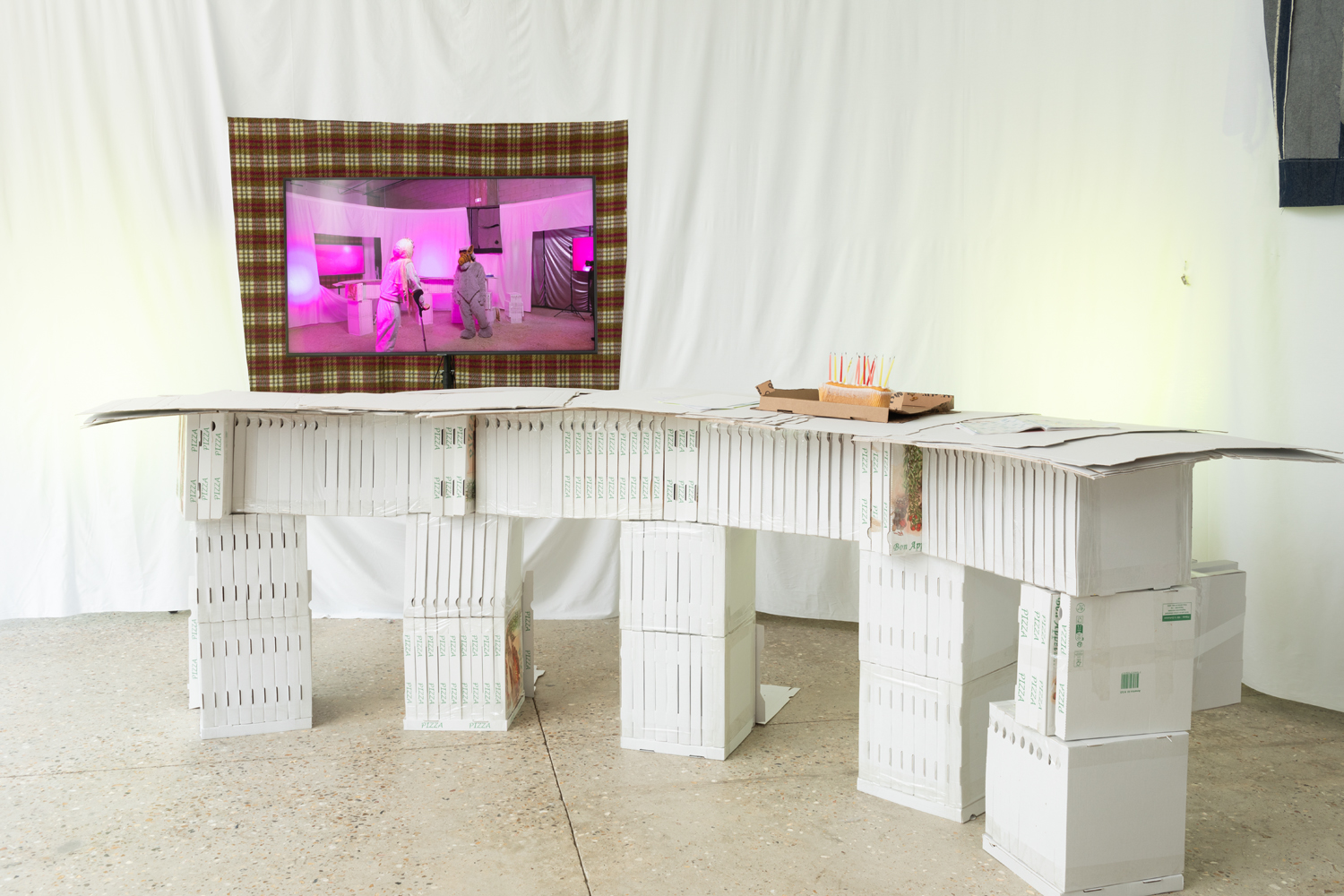
On the stage of an abandoned television studio, a semblance of Alf¹ lies, suspended in the uncertainty of a possible return to the airwaves. A limp effigy of a somewhat outdated—and controversial—television star, the muppet appears as a rebus of a television activity held in abeyance, awaiting its potential revival. Within a scenography composed of floating textiles produced with the collaboration of Marie Descraques², a studio table made of pizza boxes, a series of screens broadcasting images from the Hibou TV channel and its prime show, abandoned costumes scattered here and there, and an unoccupied technical control room, a liminal environment unfolds, awkwardly inhabited by the familiar figure of the alien.
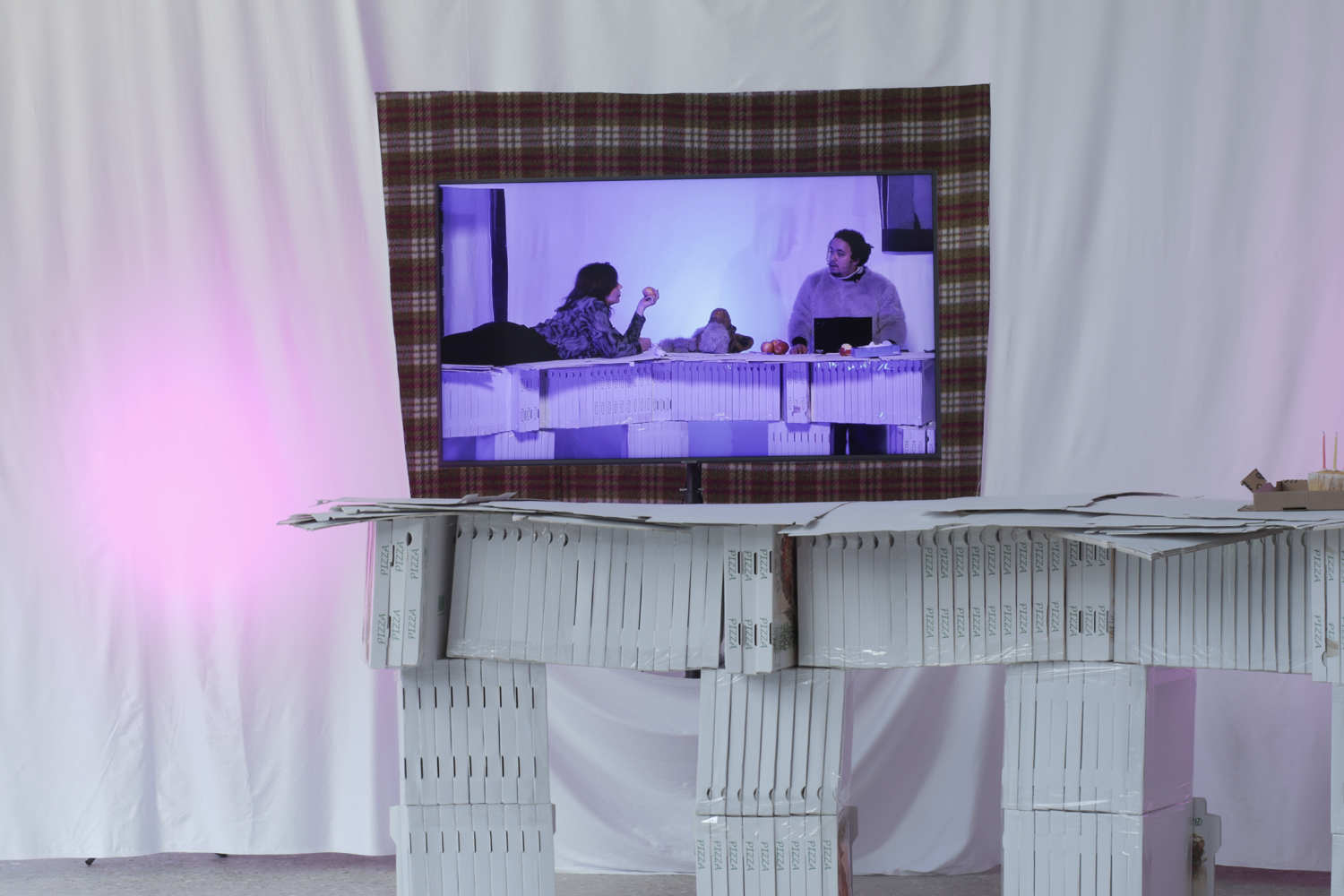
Halfway between a talk-show set and an installation, Jean-Alain Corre’s new proposal at Bétonsalon invites both reverie and action. Caught between the nostalgia of a mass medium facing imminent obsolescence and a desire to invest in and extend the televisual realm, the exhibition presents the remains of the Hibou TV Show³, a phantasmagorical program co-written with author Gaëlle Obiégly, where Alf, a grandmother, a pizza delivery man becoming a TV host, old commercials, news, love, work, and the stars all coexist. By adopting the form of a talk-show —an entirely television format centered on the act of conversation itself (the talk is the show)—Jean-Alain Corre pursues a poetic, fumbling, and chatty exegesis of television.
“Hibou TV Show” follows in the footsteps of “public-access television”, developed by artist collectives in the 1970s, particularly in the United States. The television set becomes both a resonating platform for social and political issues rarely covered by mainstream channels, and a laboratory for experimental forms at the intersection of different media genres⁴. Claiming a certain DIY aesthetic and a playful, irreverent humor, these collectives embrace distortion, disruption, and the scrambling of the video signal. By parodying certain popular programs, spectacularizing artistic performances, and incorporating “off-screen” elements that reveal what goes on behind the scenes and the technical team, they expose the mechanics of image production in all their materiality and visual grammar.
With its modular staging, deeply collaborative nature, and flexible programming schedule, Hibou TV chanel aims to be cumulative and self-reflective. It features videos co-produced with children, families, students from Émile Levassor elementary school (Paris, 13th arrondissement), students and staff from Paris Cité University and the École nationale supérieure d’arts de Paris Cergy, as well as the Bétonsalon team. Alongside these videos, other formats—capsules, test patterns, AI-generated cartoons—activate a shared imagination of popular television. They include references to iconic french show (Tournez Manège, Le Juste Prix, Le Bigdil), afternoon movies (Sister Act, Ghost), series and sitcoms (Beverly Hills, Premiers baisers, Heartbreak High), as well as old-fashioned commercials. Together, these materials contribute to expanding and enriching Jean-Alain Corre’s lore⁵. This “pocket fund” of television, inherited from a specific era with its joys and alienations, is reappropriated here in a hauntological⁶ and sensitive approach.
These collective productions will be presented in the exhibition space and streamed online. The choice of a second broadcast channel, such as Twitch, where active communities gather around formats derived from television—serves a dual purpose: to infiltrate an existing network by playing with its codes and to encourage a form of direct interaction with online audience through the logic of feedback (and instant online commenting), which lie at the core of the ‘televisualities’ explored in the artistic field⁷. Behind this technological evolution, however, a shift in affect becomes apparent : yesterday’s popular shows seem to inhabit, even haunt, today’s audiovisual productions, in a nostalgic movement — whether real or feigned — blurred by the mirages that artificial intelligence generates from these memory vestiges floating in our minds.
With Hibou TV, Bétonsalon becomes the stage for a resolutely open talk-show, where improvisation plays a central role. Uncompromising in the collective dimension of his approach, Jean-Alain Corre also invites the Bétonsalon team to take to the stage. In a joyfully chaotic horizontality, everything that happens at Bétonsalon can—or must?—lend itself to the game of television staging: conferences, surveys, meetings, workshops, tours, etc., thereby undermining the established hierarchies between what is presented in the art center and what unfolds off-screen in the institution. Hosted by non-professional actors and other excited TV enthusiasts, Hibou TV explores the malleability of roles and the dynamics of collective learning. Through this prism, our programs are reconfigured, our positions readjusted between the audience, the set, and behind the scenes, seeking new forms of redistribution. The aim is to produce amateur shows and perform them with seriousness, in order to discover in return the distorting mirror of our own organizations and projections. Playing at doing television will be as important as the images produced (the making is the show).
By drawing on the codes and paradox of proximity inherent to the talk-show, Jean-Alain Corre’s “Hibou TV Show” creates a space to explore the contradictions of our television experiences. He thus continues the work begun by Johnny, a sort of fictional avatar of the artist and “slightly weirdo anti-hero,”⁸ who already multiplied attempts to “keep alive (these) machine(s)”⁹ that shape our daily lives, rhythms, and imaginations.
In its determined quest to “transcribe the hazy syncope of a certain era,”¹⁰ the “Hibou TV Show” invites us to delve into the black box of our televisual ghosts, as if to stop skimming the surface and better play with its “promises of sparkle.”¹¹
Vincent Enjalbert, Elena Lespes Muñoz and Émilie Renard
¹ Alf is a famous puppet from the eponymous sitcom, created by Paul Fusco and Tom Patchett for NBC, which marked the landscape of American television in the late 1980s.
² Artist, designer, and magnetizer-healer. She will take part as an actress in the Hibou TV Show.
³ Following a first episode recorded during the exhibition “Hibou d’Espelette” shown at Gallery Valéria Cetraro in December 20th, 2023, for its first presentation, the Hibou TV Show invited, during its inaugural edition, several non-professional TV participants to play their own roles: the gallery owner Valéria Cetraro as producer and host, the author Gaëlle Obiégly, the curators and critics François Aubart, Franck Balland and Liza Maignan and finally the artist Jean-Alain Corre as Pink Panther/Tony Conrad.
⁴ Public access television follows in the footsteps of the Guerilla TV movement, theorized by Michael Shamberg in 1971, which calls for a reconsideration of how information is produced in order to transform television into a space for media activism and a tool for deconstructing certain cultural tropes.
⁵ The term “lore,” derived from the English “folklore,” originally refers to a body of knowledge, stories, and traditions—often passed down orally—that define a context or fictional universe. Commonly used on streaming platforms such as Twitch and in the world of video games, the term has gradually taken on a broader meaning: it now describes a set of references, codes, and narratives shared by a community that identifies with a particular cultural object.
⁶ Hauntology is a concept developed by philosopher and cultural critic Mark Fisher to describe how the present is haunted by the past: cultural forms from the past constantly resurface like ghosts in the making, insistently forcing us to perceive the current world through the prism of what is no longer there. See Mark Fisher, Ghosts of My Life: Writings on Depression, Hauntology and Lost Futures (Zer0 Books, 2014). We will collectively survey this book on Friday, April 3, 2026.
⁷ See David Joselit, Feedback, Television against Democracy (The MIT Press, 2010).
⁸ Franck Balland, text from the exhibition “Hibou d’Espelette” at the Valéria Cetraro gallery, in which the author refers to Johnny’s “dazzling disappearance” in the artist’s work.
⁹ Jean-Alain Corre in an interview published in Slash, December 2023. Viewed online on December 4, 2025: https://slash-paris.com/articles/jean-alain-corre-interview-galerie-valeria-cetrarov
¹⁰ Jean-Alain Corre in a fictional interview with Isa Gentzken, Initiales no. 11, May 2018.
¹¹ Ibid.
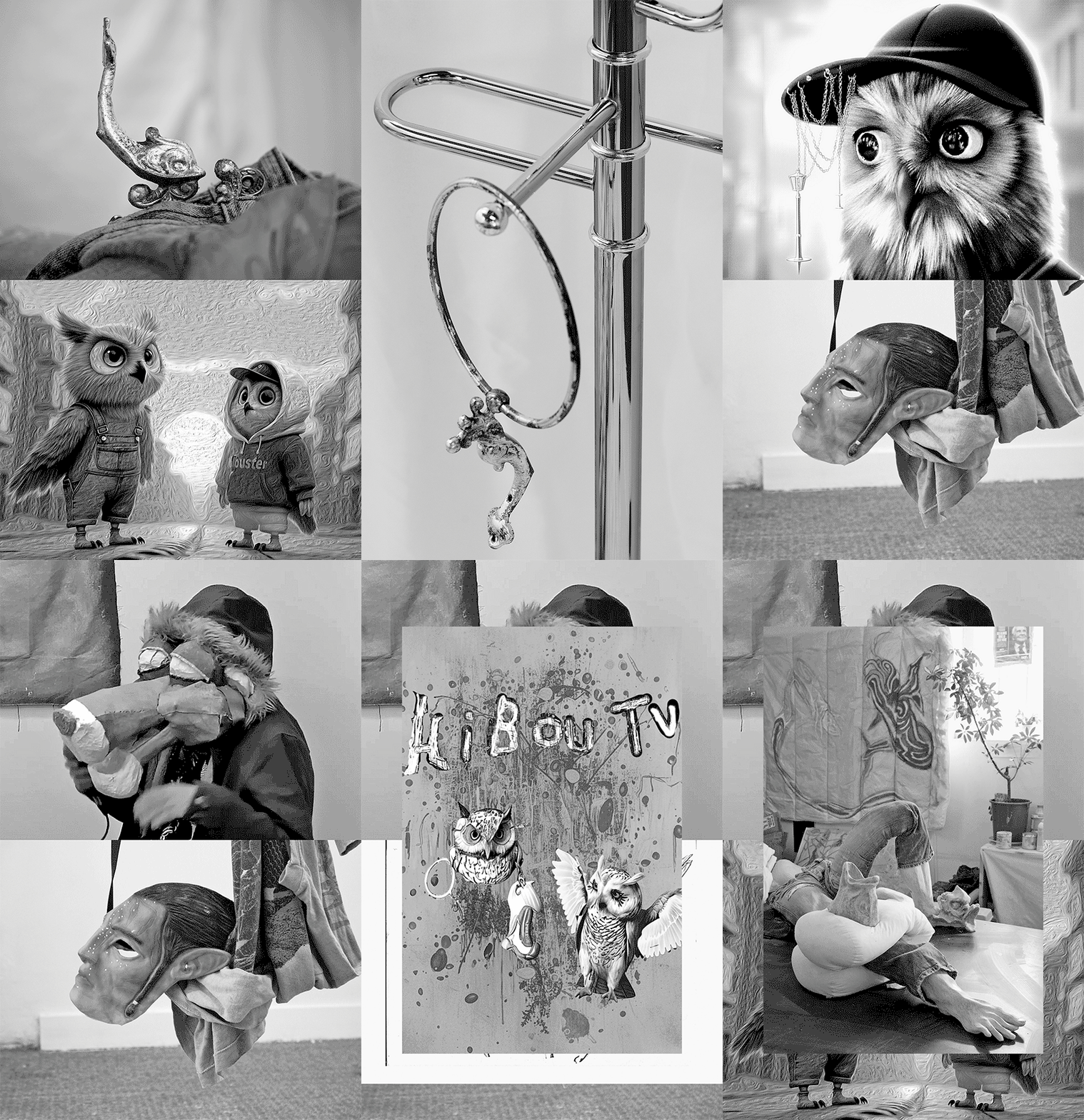
Composition: Catalogue Général. Courtesy: Jean-Alain Corre, Paris, 2025.
Composition: Catalogue Général. Courtesy: Jean-Alain Corre, Paris, 2025.
Jean-Alain Corre
Born in France in 1981, Jean-Alain Corre lives and works in Paris. His artistic approach revolves around what he calls Episoddes, based on scenarios written or drawn around the fictional character Johnny, who acts as a matrix at the heart of his production in the form of paintings, sculptures and performances. Artistic materials transform these hallucinatory experiences into hybrid environments, where the influence of normalised everyday life on the construction of individual desires can be seen. Nominated for the Ricard Prize in 2014, Jean-Alain Corre exhibited at the 5th edition of the Rennes Contemporary Art Biennale (2016), at the Palais de Tokyo in “Futur, ancien, fugitif” (2019-2020), at Pauline Perplexe (2018), at Galerie Valeria Cetraro and at FRAC Nouvelle-Aquitaine Méca (2023).
Gaëlle Obiégly
Born in Chartres in 1971, Gaëlle Obiégly lives and works in Île-de-France. She studied art history at the Sorbonne University before obtaining a degree in Russian from INALCO in the late 1990s. A performer and writer, Gaëlle Obiégly has published twelve books with Gallimard-L’Arpenteur, Verticales, Christian Bourgois and Bayard. She pursues a singular literary work, attached to a form of impersonal self-narrative, which questions language and the act of speaking, intertwining fiction, art, life and storytelling. In 2014, she received the Mac Orlan Prize.
This exhibition is conceived with the support of the Centre National des Arts Plastiques (CNAP) through its artistic project funding programme, and with the participation of the École nationale supérieure d’arts de Paris-Cergy (ENSAPC), Université Paris Cité, the École nationale supérieure de création industrielle (ENSCI – Les Ateliers), and the Émile Levassor Primary School (Paris, 13th arrondissement).
The Poissy TV project is supported by the Meyer Foundation.
Workshop for kids, teenagers & families (ages 5 and up)
With artist Jean-Alain Corre and author Gaëlle Obiégly
Registration required: publics@betonsalon.net
A TV Show by Jean-Alain Corre in collaboration with Gaëlle Obiégly.
Live public filming.
Reservation required: info@betonsalon.net
Opening of Jean-Alain Corre’s exhibition, with the collaboration of Gaëlle Obiégly
Poetry workshop for adults
Registration required : publics@betonsalon.net
Saturday, March 7, 10:30 a.m.–5:30 p.m.
Saturday, March 14, 10:30 a.m.–5:30 p.m.
Saturday, March 21, 10 a.m.-5 p.m.
Video workshop with artist Jean-Alain Corre in collaboration with the Pôle Culture of Université Paris Cité as part of the “Hibou TV Show” exhibition
Stakeholders #9 – Revisiting the archives of the exhibition “Eldoradio” (2011) at Bétonsalon
Test pattern creation workshop for children, ages 6 and up
Registration required : publics@betonsalon.net
Lecture by Pascaline Morincôme
Screening
With Alex Bag et Ethan Kramer, Dara Birnbaum, Jacob Ciocci, Jaime Davidovich, Ilana Harris-Babou, David Hoyle, General Idea, Joan Logue, MICA-TV et Cindy Sherman, Shana Moulton, Martha Rosler, Tom Rubnitz, Richard Serra et Carlota Fay Schoolman, Michael Smith.
Group reading
Screening of Perfect Lives, An opera for television (1983) from Robert Ashley
Television-making workshop for families, ages 6 and up
Registration required : publics@betonsalon.net
Video, 2’30’’
Suspended mixed fabric
Steamer, tracksuit, mask, glasses, shawl
Pizza boxes, tape
Video, 60’
Text in progress on Blanc de Meudon
Video, 2’30’’
Production Bétonsalon with the support of CNAP
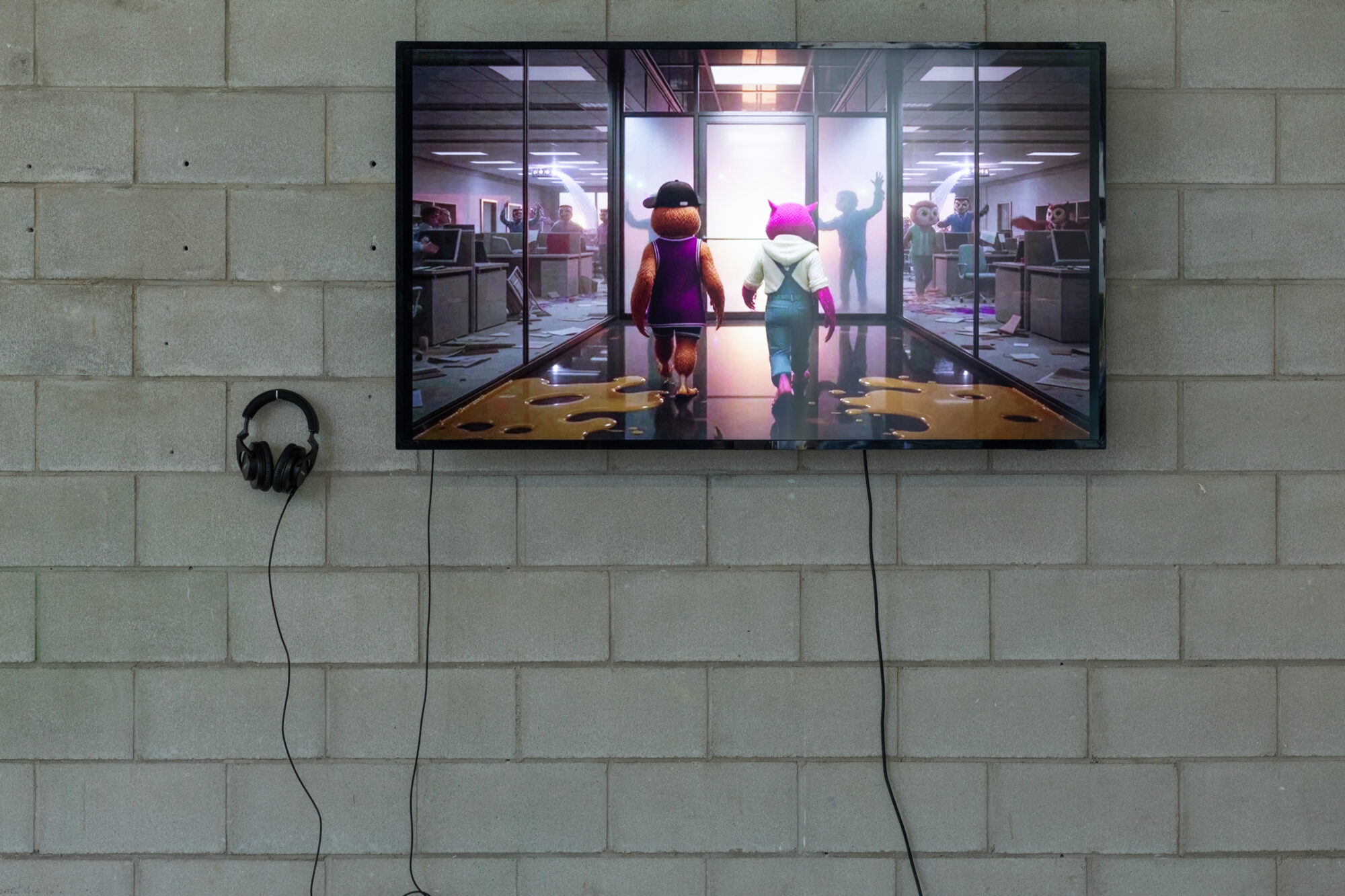
Suspended mixed fabric
Production Bétonsalon with the support of CNAP
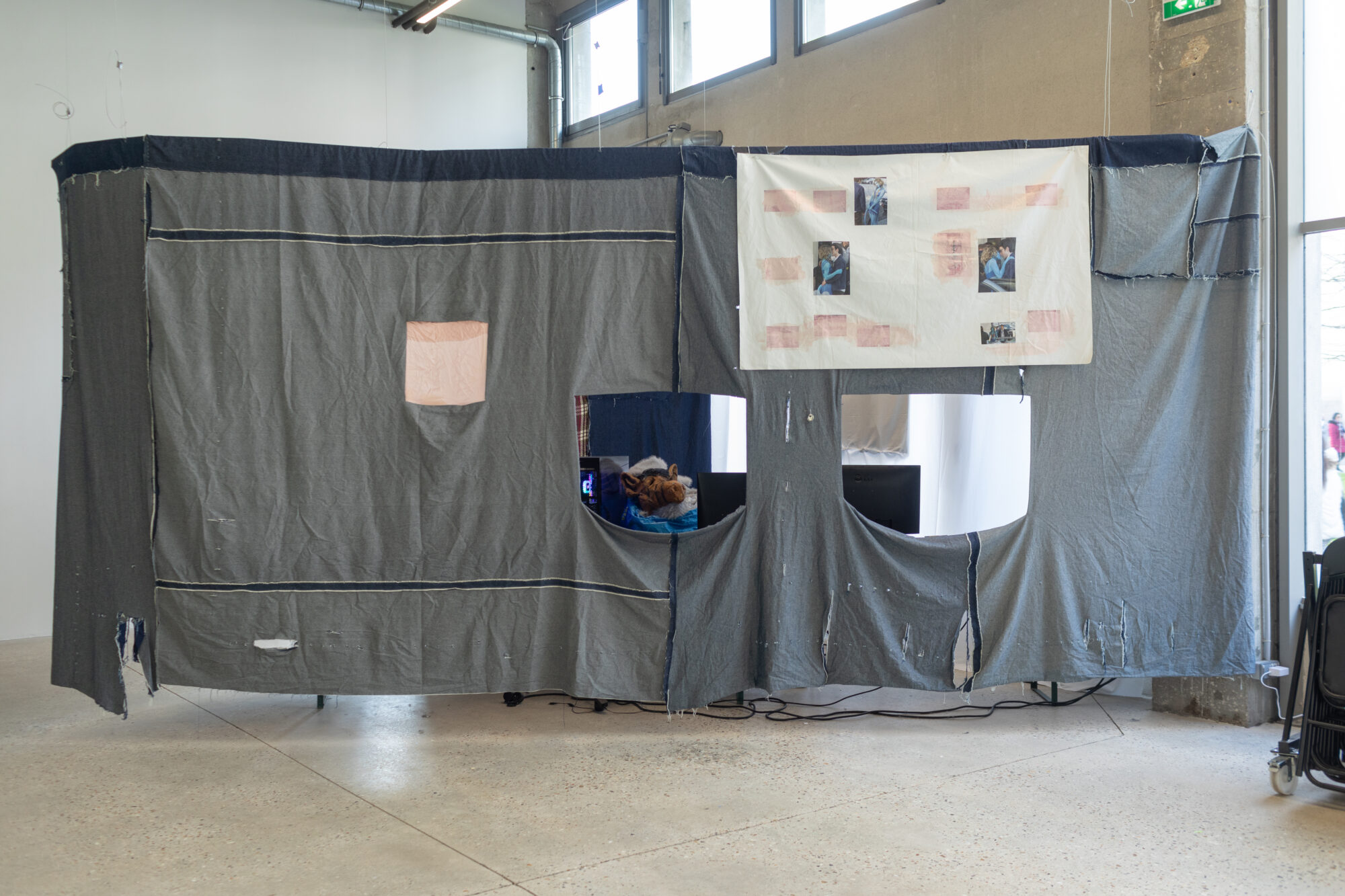
Steamer, tracksuit, mask, glasses, shawl
Pizza boxes, tape
Production Bétonsalon with the support of CNAP
Video, 60’
Production Bétonsalon with the support of CNAP
Text in progress on Blanc de Meudon
Production Bétonsalon with the support of CNAP